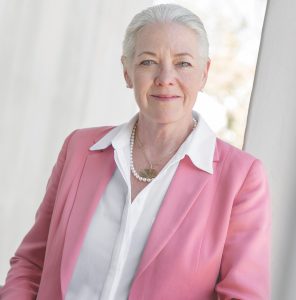
Jim Selbert: Where Technology and Philanthropy Intersect

Jim Selbert is a longtime pillar of the Santa Barbara philanthropic and business communities, blending deep financial expertise with a commitment to environmental stewardship and social impact. He holds a Bachelor of Arts in Economics from the University of Cincinnati and a Master of Science in Finance from the MIT Sloan School of Management. After earning his MS, he moved to California and worked as a financial analyst at both Ford Motor Company and Litton Industries. In 1971 he co-founded Accufy Analytics, a firm based in Santa Barbara whose software solutions have facilitated over one trillion dollars in financing, helping organizations and institutions optimize complex financial tools.
Beyond finance, Jim’s values are reflected in his work outside the boardroom. Alongside his wife Patricia and son Stefan, he owns and manages Las Cumbres Ranch, a thousand-acre cattle ranch in Los Alamos. Since acquiring it in 2017, the family has adopted regenerative and holistic land management practices to restore soil health, enhance biodiversity, and promote sustainable agriculture. He had been a longtime board member of Direct Relief, serving for nearly two decades, contributing to global health efforts and disaster response. Recently he joined the board of the Santa Barbara Foundation, and in January 2025 will also serve on the board of The Land Trust for Santa Barbara County.
With this blend of financial acumen, environmental consciousness, and long-standing service, Jim Selbert brings a rare perspective to conversations about giving: one that links measurable results with legacy, place,
and community.
Will Pulice: What role does digital accessibility play in making philanthropy more inclusive?
Jim Selbert: It’s not easy. You have to tailor your presence to resonate with your prospective donor class, which means having video as opposed to static presentations, having music as opposed to silent presentations, and captioning to emphasize the message. So philanthropy has to be savvy as to what works in the digital media space.
WP: Do you think technology has changed why people give or only how they give?
JS: I would dispute the premise. I think it changes people’s giving because it allows the nonprofits to find their people – to find their donor class.
WP: How does technology make individuals feel more connected to the causes they support?
JS: It allows the audience to self-select the nonprofits that they’re interested in. It reverses the process – you throw out your digital presence and your donors will find you if it’s done well.
WP: Do you see generational differences in how donors interact with technology in philanthropy?
JS: Absolutely. The older generation is now probably comfortable with Facebook, less comfortable with Instagram. The larger donors are probably much more comfortable with LinkedIn than Facebook. You have that generational divide, but that’s going away as us older folks die off.
WP: Is donor data being used to personalize the giving experience, and how important is that?
JS: Absolutely. There are what are really called customer relationship management systems – there is customer relationship management software specifically for nonprofits that allows analysis of donations and personalization of solicitations.
WP: Are there any ethical considerations around using data to drive giving behavior?
JS: Not really, as long as you are not leaking that data for your own commercial or other person’s commercial or criminal purposes. If the data’s kept inside the nonprofit and isn’t exploited for outside purposes, no. The nonprofit should make statements that your data will be kept private.
WP: How has technology amplified storytelling around causes?
JS: It has, especially in the sense of video presentations. So webinars, video clips from events, complete videos from presentations, the use of emotional content with music and dramatic footage – as long as it’s not pandering, which is a fine line – is a great way and a way that is being increasingly used.
WP: Much of the conversation around technology and philanthropy focuses on outreach and donor engagement. But technology also plays a critical role in how nonprofits deliver services and create real-world impact for the people they serve. From your perspective, how has technology improved not just the efficiency of fundraising, but the actual effectiveness of nonprofit programs?
JS: I haven’t worked with many nonprofits that use digital technology to enhance their mission, except in one case: outreach to improve digital literacy and access for underserved beneficiaries. That is the only place I’ve seen it used directly to fulfill the mission.
WP: Can you talk more about that, especially for underserved beneficiaries?
JS: For example, the Santa Barbara Foundation has a program focused on improving digital access and literacy for marginalized groups.
WP: Have you also seen how technology has improved internal efficiency?
JS: Yes, I’ve worked at several nonprofits that use digital technology to enhance their mission. For example, the Santa Barbara Foundation has a program to improve digital literacy and access for the underserved, Direct Relief has partnered with the MAVEN project. The MAVEN Project connects federally qualified health clinics with medical specialists, not just general practitioners. That access helps clinics better serve their patients. Another example is the World Telehealth Initiative, which provides surgical robots and expertise to underserved populations. These innovations bolster local medical providers.
WP:What other innovations have you seen that allow grassroots or smaller nonprofits to deliver services more effectively?
JS: One fast growing local company is Collective Energy which provides redundant power systems, usually solar plus battery. Clinics need reliable power for electronic medical records and medical refrigeration, especially vaccines. Without it, they are vulnerable in storms or outages. On the internal side, enterprise software and donor management systems have also been transformative. Another example, who would be the Land Trust for Santa Barbara County, which is using Instagram to invite folks to participate in expertly guided hikes to ecologically significant areas of the County.
WP: Many donors, especially younger generations, say they want measurable results before giving or giving multiple times. How important is it for nonprofits to show clear, real-time impact, not just where the money went, but what difference it made in people’s lives?
JS: It’s extremely difficult. There are two main schools of thought. One is trust-based philanthropy, where donors like MacKenzie Scott provide unrestricted funds without reporting requirements. The other emphasizes measuring impact. But measuring impact is hard and requires a plan. Often nonprofits rely on stories and anecdotes to demonstrate impact, because making precise quantitative statements can be challenging.
WP: How do you see the balance between trusting an organization and demanding evidence of outcomes?
JS: Trust outweighs proof of outcomes.
WP: What are legacy donors, and how does impact reporting differ for them compared to newer or smaller donors?
JS: Legacy donors include people who make provisions in their estate plans to support a nonprofit. They are often cultivated through special events and legacy societies, which recognize and engage those who have made or intend to make such provisions. Maintaining their trust requires continuous attention. While trust is more important to them than outcomes, showing outcomes when possible is still valuable.
WP: How does a legacy society function and benefit nonprofits?
JS: A fundraising team must make an intentional effort outside of normal fundraising to build and sustain a legacy society. These donors need consistent, multi-year engagement. Although different from other fundraising efforts, it is critical, and legacy gifts are often very large.
WP: How do corporate gifts fit into this picture?
JS: Corporate gifts are another form of donation. Often corporations sponsor programs so they can publicize their involvement, which helps with recruitment and government relations. Sometimes corporations use philanthropy as a way to repair reputational damage from negative press. Nonprofits must decide whether they want to align with those motives.
WP: Do local nonprofits face unique challenges in adopting digital tools compared to larger organizations?
JS: Absolutely. Because their employees in the fundraising area often are not schooled in effective use of platforms.
WP: Looking ahead, what kinds of innovations could genuinely transform philanthropy in the next five years – whether in donor engagement, nonprofit service delivery, or community impact?
JS: That is harder to predict, but the field is evolving quickly. The potential is there for innovations that will significantly reshape both donor engagement and service delivery.
Jim Selbert’s perspective offers an important reminder at a time when philanthropy is adapting to new tools and expectations. He emphasizes that technology does more than provide convenience; it reshapes how nonprofits find their supporters and how donors discover the causes they care about. At the same time, he points out that trust often outweighs data, especially for legacy donors whose commitments come from long-standing relationships rather than measurable outcomes. This balance between innovation and tradition is where his voice carries weight. Drawing on decades of work in finance, governance, and community service, Jim has seen how organizations thrive when they adopt new methods without losing sight of their core values. His reflections suggest that the future of giving will depend on nonprofits embracing digital tools while staying rooted in the trust, transparency, and personal connection that make philanthropy meaningful.