A Global Network of Medical Aid That Is Everywhere All at Once
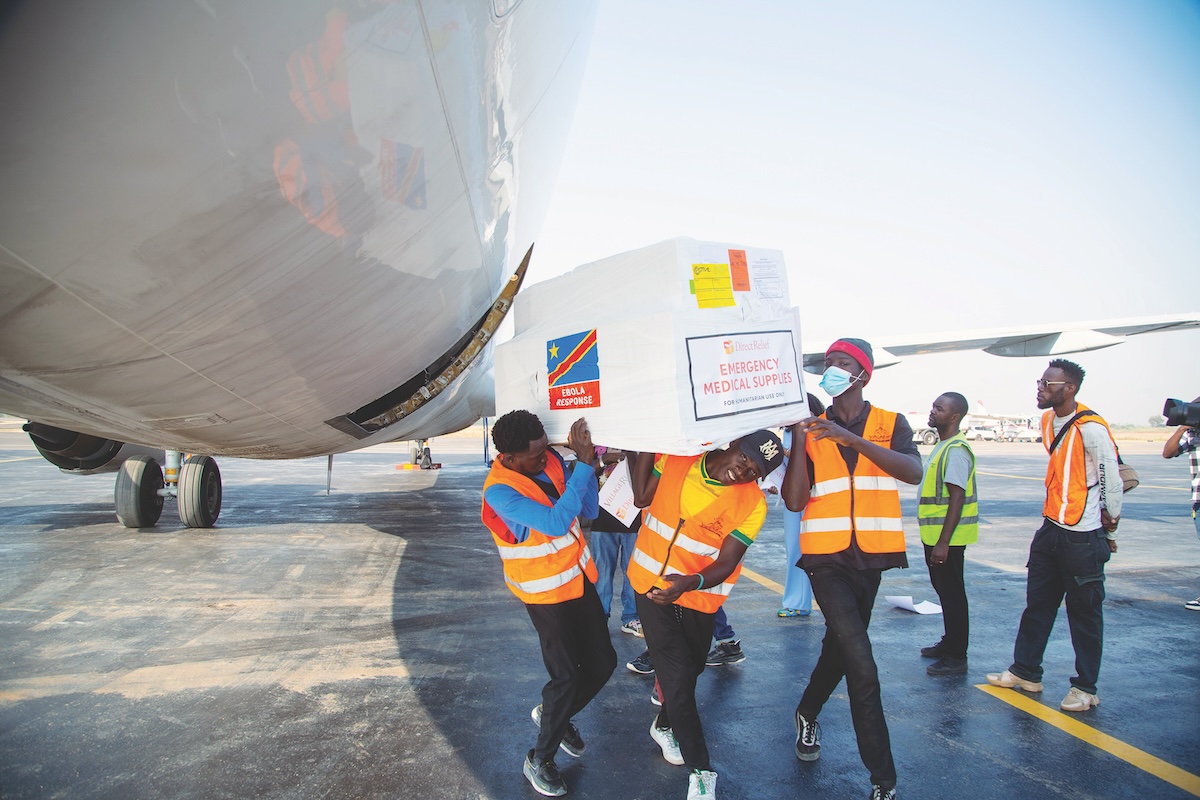
Direct Relief began during a time of war, geopolitical tension, political division, and global economic instability. More than 80 years later, the world still faces hardships similar to those that led Estonian exile William Zimdin to start the aid organization in Santa Barbara after fleeing Europe during World War II. What began with Zimdin sending packages to family and friends on the war-torn continent has grown into a massive, privately funded operation delivering billions of dollars in medical resources and emergency aid. Recent responses have included earthquakes in Nepal and Venezuela, Congo’s Ebola outbreak, and the ongoing war in Ukraine.
“The needs are not any smaller than they were at the beginning,” says Tony Morain, the organization’s vice president of communications. “They’re getting bigger, and the resources to address them are being reduced, with aid cuts in a number of developing countries. We’re also seeing more extreme weather-related emergencies [and] more wars than at any point in modern history, so I think Direct Relief is doing more than it ever has.”
Direct Relief supports local organizations, doctors, clinicians, and nurses around the world, working around the clock across thousands of groups, says Morain. This network enabled a quick response during crises such as the recent Nepal floods, activating local partners who helped after the 2015 earthquake and drawing on regional knowledge gained over Direct Relief’s 40 years of work there. “You can’t build 2,000 relationships in 90 countries quickly,” says Morain. “Some of these relationships go back longer than anyone’s tenure at Direct Relief.”
Pressured U.S. Healthcare Services
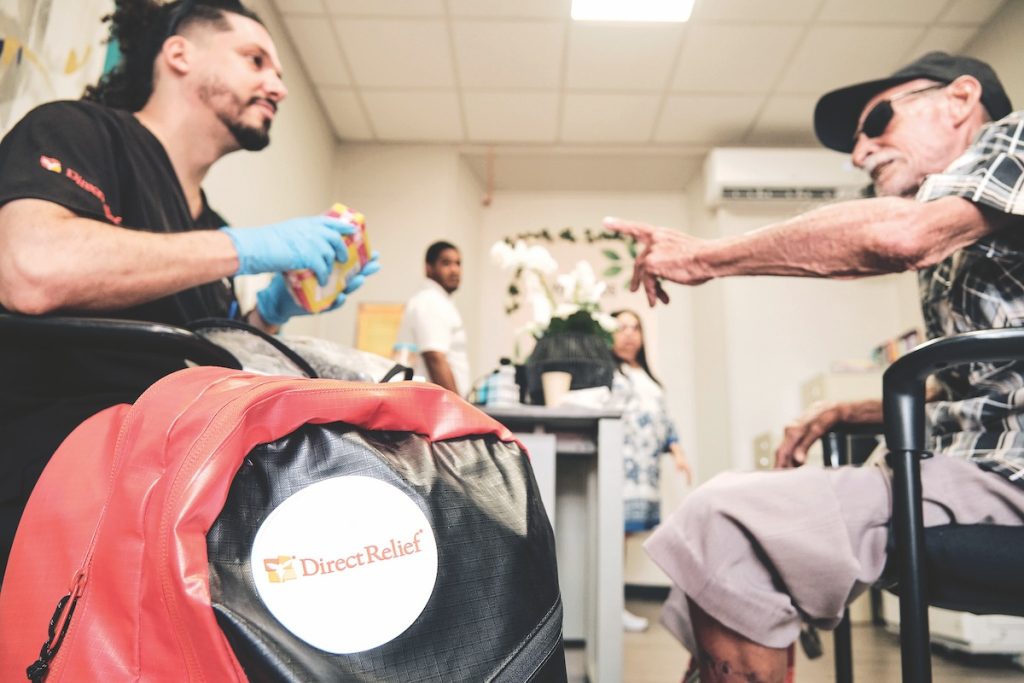
Beyond its global impact, Direct Relief plays a major role in the U.S. medical safety net, including diabetes support. Since 2008, it has delivered donated medicines and medical supplies valued at a cumulative $3.1 billion to nonprofit health providers in all 50 states, some of which face uncertain futures. “We’re seeing rural hospitals close, which places more pressure on the nonprofit clinics,” says Morain. “Then more people will not be able to cover premiums as they go up. In the United States, poor health and poverty are intertwined in a way nothing else is.” Morain identifies “real intense strain on the U.S. healthcare system” as one of Direct Relief’s greatest needs in the immediate future, alongside more support for Ukraine, echoing Zimdin’s initial response to war in Europe.
Zimdin died shortly after founding Direct Relief. Though the entrepreneur was known for many endeavors, his enduring impact came from one of his last acts. “I doubt he would have ever guessed his most lasting legacy would be this volunteer effort he started in his house,” says Morain. “I think about that all the time when we come across a new organization: who’s to say it won’t grow into a massive humanitarian organization with global impact one day? That’s how Direct Relief started.”
Direct Relief
Donate now!
directrelief.org
Director, Partnerships & Philanthropy: Laurie Leis
(805) 879-4329
Mission
Direct Relief is a humanitarian aid organization, active in all 50 states and more than 80 countries, with a mission to improve the health and lives of people affected by poverty or emergencies – without regard to politics, religion, or ability to pay.
Begin to Build a Relationship
We know you care about where your money goes and how it is used. Connect with this organization’s leadership in order to begin to build this important relationship. Your email will be sent directly to this organization’s director of development and/or Executive Director.
Direct Relief’s mission, impressive record of success, and potential to make an even greater impact in the world inspire me more than any other outside interest.
Anytime. Anywhere. Anyone in Need.
Donations to Direct Relief help ensure a clinic’s medicine shelves stay stocked, its lights stay on, and people throughout the United States and around the world can access the healthcare they urgently need in times of disaster and every day.
As a strictly nonpartisan organization that accepts no government funding, Direct Relief depends entirely on the generosity of individuals, businesses, and foundations to power its mission. And by leveraging in-kind donations of medicines and medical supplies, Direct Relief maximizes the impact of every contribution it receives.
Learn more, give, or get involved at directrelief.org.
Board of Directors
Harry McMahon
Laurie Siegel
Annalisa Pizzarello
Adam Cooper
Emma Carrasco
Mark Schwartz
Jeff Berman
Mary Dwyer
Heitham Hassoun
Henrietta Holsman Fore
Jay McGonigle
Curt Menefee
Marla Salmon
Perry Siatis
Tom Strickland
Thomas Sturgess
Elizabeth Toro