Dorothy Largay: The Secret Sauce of Life
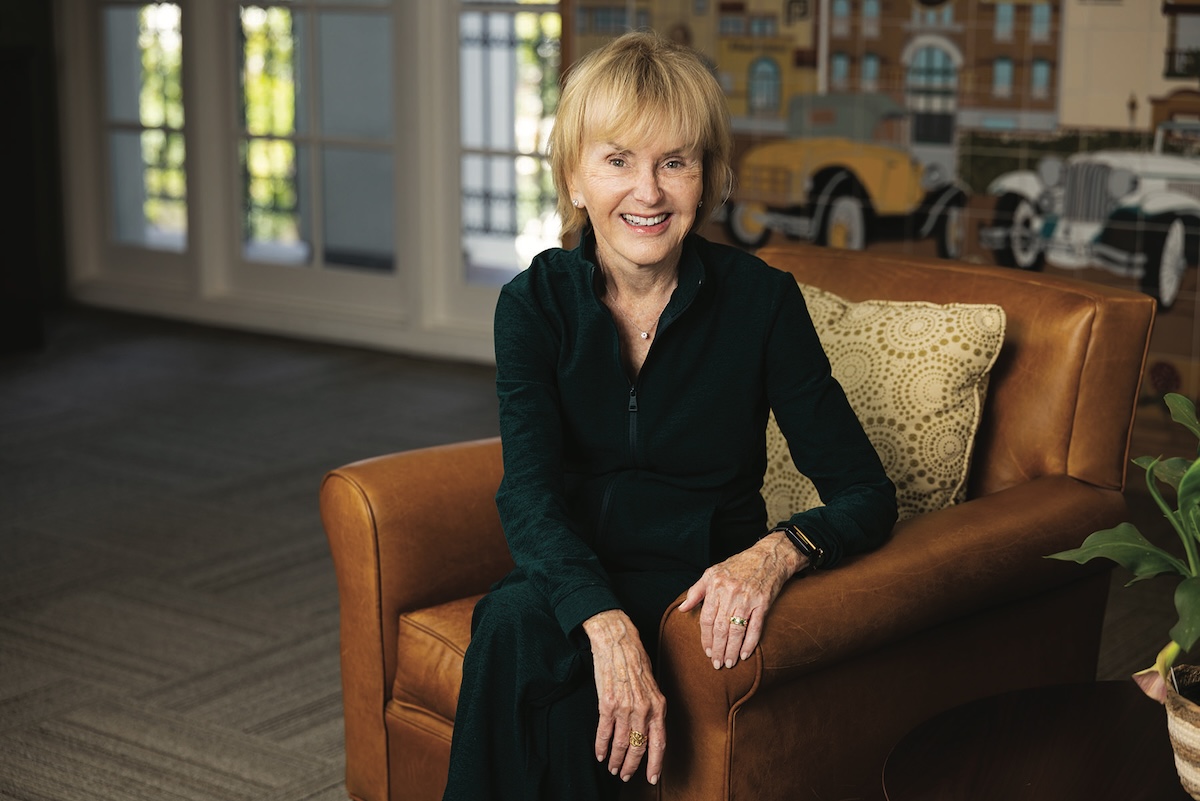
Those who make philanthropic service their life’s work often have the philosophy of service instilled at an early age. Or maybe a financial largesse leads to looking into ways of giving back. For Dorothy Largay, both of those have certainly played a role, but perhaps the most startling and unexpected catalyst was a moment in world history that she serendipitously happened to witness first hand.
It was 1989, and Largay was a facilitator at an executive offsite at Apple in Berlin almost two decades before the first iPhone hit the market. That was the day the Berlin Wall fell, and Largay found herself as one of the first people able to walk through the Brandenburg Gate that had separated East Germany from West Germany.
“It was an incredible feeling, and it ignited my desire to really make a difference in the world,” she says.
Twenty years later, following several different endeavors championing democracy, training, and other causes, Largay relocated to Santa Barbara, where she immediately became involved in the local nonprofit world. The organizations she volunteered for, served on the board, contributed to and/or otherwise supported include Cottage Health and Santa Barbara Neighborhood Clinics, as well as Direct Relief, starting when “International” was still part of its name. Crucially, she also created the Linked Foundation, which set a 20-year fixed time frame to spend down the foundation’s $20 million in funds to tackle pressing challenges today in international women’s health and humanitarian relief. With that effort having wrapped up late last year, Largay was willing to take a look back at her remarkable life of service.
Steven Libowitz: What are your earliest memories of being of service?
Dorothy Largay: I remember that my mom always found time to volunteer, even though there were eight of us children. Thursday mornings were her sacred time when she became a “Pink Lady” at the local hospital, helping patients and staff… But I wasn’t all that involved as a kid. I started volunteering as a renegade who hated my boarding school. I kept getting enough demerits so that I had to stay in the afternoon on Fridays for three hours. That’s when I started a volunteer group for local kids. I enlisted a bunch of classmates and we did all kinds of volunteer work. Although it was not very successful, it was a great way to spend those three hours each week.
SL: What was the next step in your journey?
DL:Well, I got my BA from Boston College and PhD from the University of Oregon and became a psychologist. I did a lot of family therapy in my early days. But then I decided to use the training to do organizational psychology work, which is how I ended up at Apple in the [company’s] very early days. It was interesting because when I was interviewed, they said, “We like you. However, you don’t have any business experience, so let us know when you finally get some.” So I opened up my own company to do communication and team building trainings for companies in Silicon Valley. Six months later I got a call from Apple and they said, “I hear you have experience,” and they hired me. Eventually I became director of worldwide leadership development at Apple; it was such a great place to be at, so entrepreneurial and very creative. The tagline, which really was the company’s philosophy, was “The Power to Be Your Best” (about how tools pioneered at Apple helped individuals work, learn, and create). I loved it.
SL: Until they brought you to Berlin.
DL: Well, it was just a coincidence that our strategic planning offsite in Berlin was the day the Berlin Wall fell. It became a really pivotal moment in my life. I left Apple within four months and started volunteering at the International Management Center in Budapest to do a few workshops in managing a market economy for young managers. It was extraordinarily powerful for me to make a small difference in helping bring democracy to these countries.
SL: It seems like that was part of continuing a thread that wove together working as a therapist and in leadership development, of helping to make people be more effective.
DL: Yes, that’s right. Later, I went to Santa Clara University and headed up their Executive Development Center for a few years. I also did a lot of executive coaching with high tech and biotech companies. It was very rewarding.
SL: After all that time in the Bay Area, what brought you to Santa Barbara in 2005?
DL:It’s an old story, but we fell in love with the area like everybody else does. My husband and I were in our 50s and thinking about where we wanted to land to build the next chapter for our lives. We had just visited soggy Napa Valley, and came down on a business trip in February. It was a sunny and clear day with a dusting of snow on the hills, and in the distance were waves glistening in the ocean. We immediately decided to stay over and start looking for a place to live.
SL: Once you got here you dove right in with working with nonprofits?
DL: Well, as we say, it was a time when we were not re-tired but re-fired (up). I wanted to meet kindred spirits. I’m not religious, and we didn’t have kids, so I didn’t have a built-in social network. So it’s always volunteering. I did research into which organizations were doing work that I thought was incredibly cost effective and impactful. Direct Relief rose to the top immediately.
SL: But you didn’t try to muscle in as a longtime executive coach, rather starting off as a volunteer packing boxes to be sent overseas?
DL: Doing that gives you a much better understanding of what the work really is, and then you get to know the people and how they work because you’re working side by side with them. Eventually I did some executive coaching and organizational work there. Over the years, while I serve on boards now, my real love is still the hands-on work. I always say if you’re ever depressed, go and pack boxes for Direct Relief. Or do some volunteer work at the neighborhood clinics and see what a difference you can make. It lifts your spirits.
SL: Can you share about co-creating Direct Relief Women?
DL:We were a bunch of volunteers who wanted to fundraise for our main interest in maternal health. We came up with the idea of working to “ensure safe births,” by providing Safe Birth Kits for midwives. Over time, these kits have evolved and are used by midwives around the world, giving them the instruments and all the supplies required to perform about 50 safe births per kit. I am very excited that Direct Relief is significantly expanding this much-needed program.
SL: Which brings us to Linked, which you founded to invest in initiatives for health and economic self-reliance of women in Latin America. What was the impetus there?
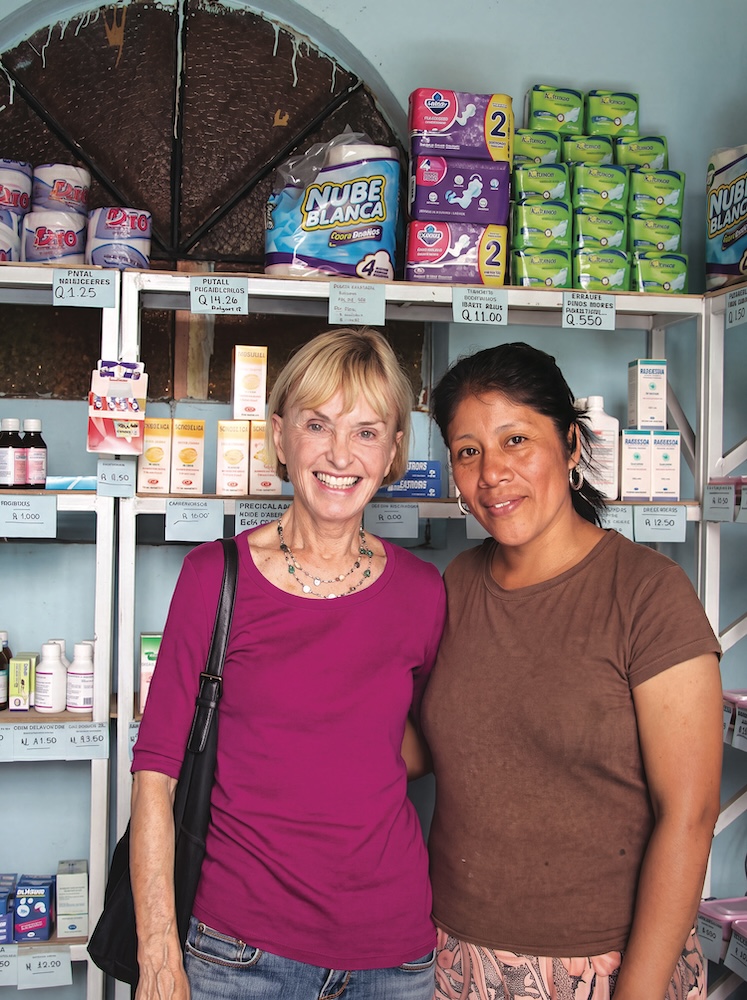
DL: I got a windfall right around the time of the Iraq war, and I believed if we had more women at the table making decisions, we would be in fewer wars. Women are often the primary agents for social change. But that requires economic independence of some sort. That led me to the world of microfinance, and eventually I focused primarily on providing health services for women, because when you’re poor, you get sick, and when you’re sick, you get poorer. I just fell in love with the health services side of microfinance. So I started partnering with a series of microfinance organizations to expand the health education and services part of their portfolio. Eventually that work grew into investing in social enterprises dedicated to providing health services to vulnerable women and their families.
Drawing on my business background, I always wanted to figure out how we could have models that were self-sustaining so that the organizations weren’t always dependent on donations to continue. We typically had a three-year investment runway for them to become sustainable, providing both funds and technical assistance.
SL: The idea of a sunsetting foundation is almost anathema in the nonprofit world. What made you go in that direction?
DL: Limiting one’s investments or donations to five percent of your corpus, which is typical, provides only drops in a bucket, a marginal difference for a major problem. My philosophy is that we should use our bundle as strategically as possible, not try to hold on to it; to make the difference now.
SL: You just closed the foundation this year, I believe. Were you happy with how it worked out?
DL:I am satisfied with what we’ve done, but more importantly, my partners and I at Linked have developed strong relationships with other organizations that are carrying this work forward. It’s taken flight. So it’s not just what we did. I think we helped pave the way for other organizations to get involved and to expand the portfolio of health organizations.
SL: How can local nonprofits adopt that model to be more effective?
DL: It applies mostly to philanthropists. Don’t hold on – make bold impact investments now with a clear goal. The same is true with foundations if they can let go of the idea of going on forever. You don’t have to do what we did and take the whole corpus. You can take a sizable chunk, put a time limit on it, pick some problems you want to solve, and go for it.
SL: Here in town, you’re involved with several health initiatives. How have you made those choices?
DL: There are some great organizations that really will use funds incredibly thoughtfully and with high impact. Particularly now with the cuts in Medicaid, the cuts in social services, it’s all hands on deck, and we have to support those organizations that are helping our most vulnerable right now. I see this as triage time.
SL: What has this life of service done for you for all these decades? What keeps you going?
DL:I guess I’m a chip off the old block. I gave my mom a coffee cup and it said, “God put me on this earth to do many things. I am so far behind, I will never die.” And that’s how I feel. I have a list [of philanthropic endeavors], but it doesn’t feel like a to-do list. It feels like a “Can I, please?” list. I’m just so grateful and joyful to keep going. Philanthropy is not sacrifice. It’s the secret sauce of life.