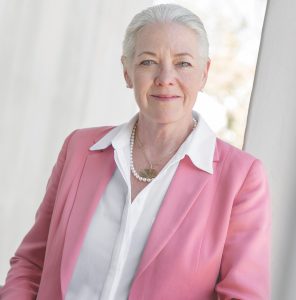
Jeff Atwood & Dr. Betsy Burton: Guaranteed Basic Humanity
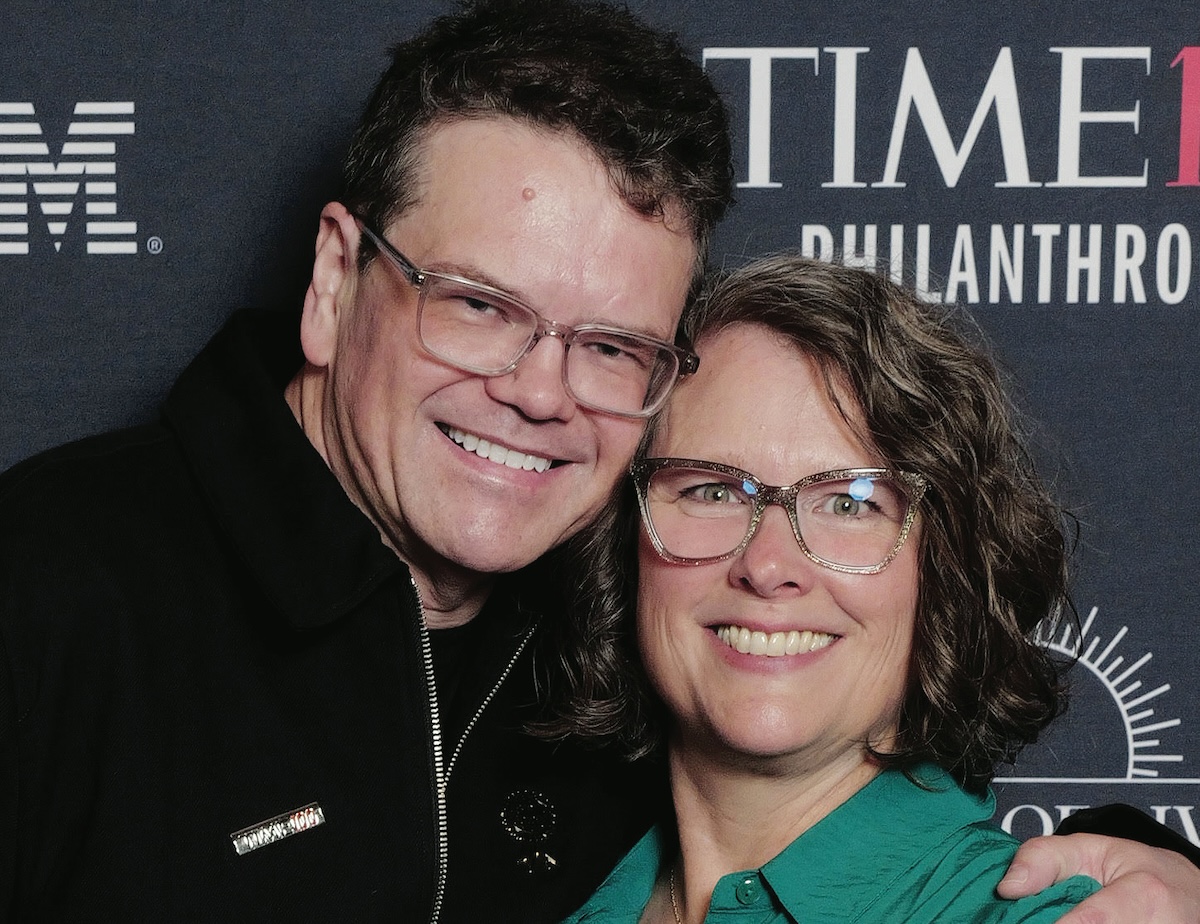
In 2025, Jeff Atwood posted the following headline on Reddit: “I’m giving away half my wealth to make the American Dream possible – ask me anything.”
Jeff Atwood is a software developer, author, entrepreneur, and blogger best known as the co-founder of Stack Overflow, the wildly successful knowledge market website.
By “half my wealth,” Atwood is referring to an amount surpassing $50 million, some of the money he earned from the $1.8 billion 2021 sale of that website. Since that pronouncement, Atwood and his wife, Dr. Betsy Burton, a molecular biologist who helped develop cancer drugs with Plexxikon, have rapidly shared over half their wealth to help keep the American Dream attainable for everyone.
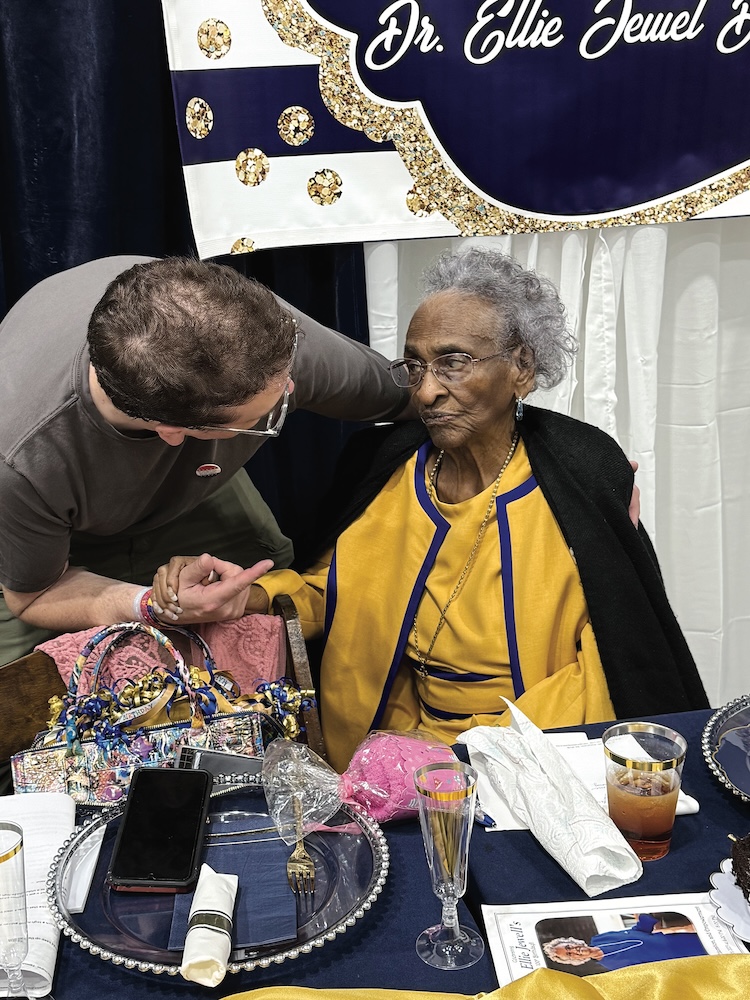
After a series of million-dollar donations to high-profile charitable organizations like Team Rubicon, Planned Parenthood, and Global Refuge, Atwood and Burton have started the Rural Guaranteed Minimum Income Initiative, giving money directly to families in three impoverished rural counties in West Virginia, North Carolina, and Mississippi. Over the span of 16 months, these families are receiving $1,500 per month to spend however they please on whatever they need. They’re hoping the initiative will provide data to support and ultimately become public policy for a more equitable America.
Atwood and Burton see themselves as “amateur philanthropists,” but their ambitions are grand – they are committed to eliminating poverty from the bottom up.
Here they talk about the elusive American Dream, their “firefighting” style of philanthropy, and what it takes to stabilize those struggling in poverty.
Zachary Bernstein: What’s your definition of the American Dream? Why is it out of reach for so many and how do you hope your philanthropic giving will help?
Dr. Betsy Burton: The American Dream is having the possibility to achieve your goals if you go to school and work hard; being able to lift yourself up in the world. That’s gotten out of reach for most people. There are plenty of people working hard and getting their education that still feel stuck scraping by every month. They don’t have the possibility of owning a home. Some people can’t finish college because they don’t have the money.
Jeff Atwood: I like Betsy’s answer. My answer is very similar. You feel like you’re stuck on a treadmill. You’re running as fast as you can to stay in place. We talk about every generation doing better than the previous generation, but I don’t think that’s true anymore. We need to ask ourselves, “What is this country about?” I talk to a lot of Lyft drivers who are mostly immigrants and I always ask them one question: “Do you feel like America has lived up to its promise for you?” And the answer is universally yes. They always feel like it’s better here and there’s more opportunity. I want it to stay that way for everyone, not just the 1% because we’re moving to this second Gilded Age where it’s the haves and the have-nots. There’s two tracks: the rich person track and the everybody-else-track.
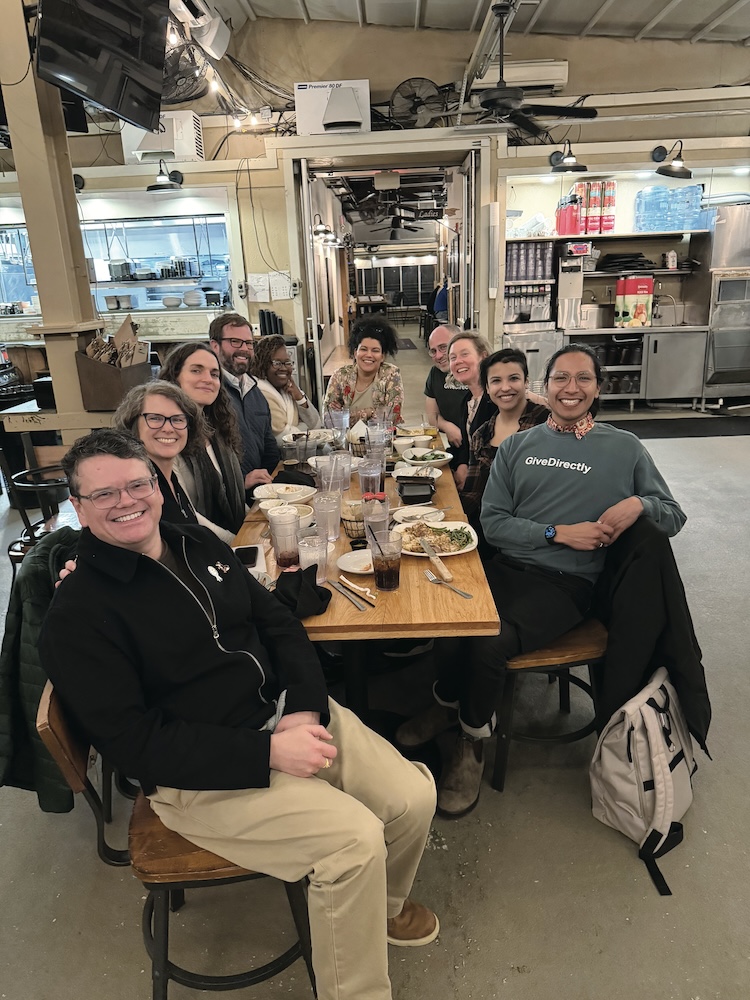
ZB: In January of last year, you donated your first $8 million, $1 million each to eight organizations; PEN America, The Trevor Project, and the NAACP Legal Defense Fund among them. How do these eight fit in with your own vision?
BB: We thought about which organizations were doing the things that we like, but also, they complement each other. They’re doing different things and they affect the lives of lots of people in America. They’re pretty high-profile organizations, too, so it’s not like we discovered these tiny little nonprofits. Trevor Project, Planned Parenthood… These places are already out there doing great work.
ZB: You’ve also started – and this is fairly new – the Rural Guaranteed Minimum Income Initiative (GMI), giving money via GiveDirectly (a nonprofit organization with expertise in this type of program) directly to people in impoverished rural areas. What can you say about the benefits to families receiving a direct regular influx of cash into their checking account? What data have you seen so far?
JA: With our philanthropy, there was the firefighting phase – immediate donations – which ended up being $16 million. A lot of firefighting was necessary, more than I thought there would be. And then the $50 million on top of that is for the long-term systemic fix of a guaranteed minimum income, which is like a universal basic income, though this is a more evolved form. Instead of giving money to everyone – which is kind of insane in my opinion – GMI gives it to the people that need it the most to reduce poverty. I really think that’s the key here.
We picked three counties. My mother is from North Carolina, my dad is from West Virginia, and they had very poor upbringings. Their home counties are a good place to start because when you do these GMI programs, you’re there to build up the structures that are already in the community.
BB: There’s a lot of good data to support this initiative, too. If we look at OpenResearch’s data from the Universal Basic Income study that they ran from 2020 to 2023, you can see two interesting data points. First, there was a reduction in alcohol and opioid use. When you talk to people about GMI, some people think the recipients are just going to sit around, not work, drink, and do drugs all day. Turns out that’s not the case because they have less life stress and less of a desire to seek out outlets to relieve that stress. And the other piece of data we liked was that there was a 26% increase in giving to other people who are struggling. So, these are people that are in extreme poverty who have almost nothing… And they’re sharing the money they receive with other struggling people.
JA: Because they know what struggle is. Not everything was just given to them. They’re out there working very, very hard just to survive and they have a tremendous amount of empathy for people in similar situations.
If you stabilize people in poverty, it stabilizes a lot of society – the communities and families. It makes a better world. We’re doing this at the county level in rural areas where people feel ignored because money goes much further in these rural counties than New York City, for example.
ZB: What do you think of similar programs like your Rural Guaranteed Minimum Income Initiative that have been launched in the Bay Area, like United Way launched one and the Abundant Birth Project for example? Even though most of the Bay Area wouldn’t be considered rural, do you see those programs growing in the coming years?
JA: I think all the data overwhelmingly shows that almost all direct cash transfer programs – simply giving money to those in most need of it, and trusting them to use that money to better their own lives – works. The Abundant Birth Project gives money to pregnant individuals at the highest risk of preterm birth. I completely agree mothers at high risk are in most need of unconditional cash assistance to raise their children as best they can. I do see all direct cash transfer programs growing, if they are thoughtfully designed and executed (that is, they provide an adequate amount of money over a long enough period of time to give a period of safety and foundation), and also gather results so we can prove, time and time again, that direct cash transfer works.
ZB: Do you have any plans to bring your own GMI program to California? If not, what do you hope to bring to your own local community?
JA: As we say on the homepage of https://staygold.us: “Over time, with resolve and careful planning, we will fund rural county GMI studies in all 50 states.” So far we’ve funded WV, NC, and MS. We’d love to do a rural county GMI program in California. Simply click on the map on the front page to browse all the counties in California and see where the need is greatest. We are actively seeking funding to reach every state in this great nation.
ZB: Have you been able to convince anyone to follow your lead into your “firefighting” style of giving?
JA: It’s a very protracted process for most people. On the other hand, MacKenzie Scott’s trust-based model of philanthropy has a lot of strengths. It’s just giving money to organizations that are doing good work and saying, “Go kick ass,” and maybe not insisting on putting your name on the building. Just trust the organizations and empower them.
BB: A lot of people don’t like that. Most philanthropists tend to be more traditional with a lot of process and that takes time. We like to work faster than that.
JA: Not MacKenzie Scott, though. She’s the number one philanthropist in the world. Last year she gave away more money than anyone in history, money with no strings attached, so that money could be used immediately. We love her. She’s amazing.
ZB: And finally, where do you see your brand of philanthropy headed in the future?
JA: We want to strongly advocate for trust-based philanthropy. Money should be doing something, for someone, somewhere. And when you give trust, you empower organizations. You unleash them so they can show the whole world what they can accomplish.