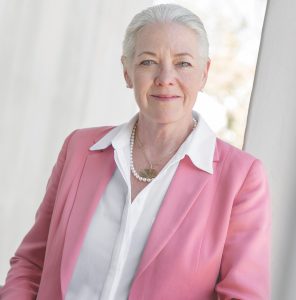
Emily Grossheider: It’s All About the Greater Good
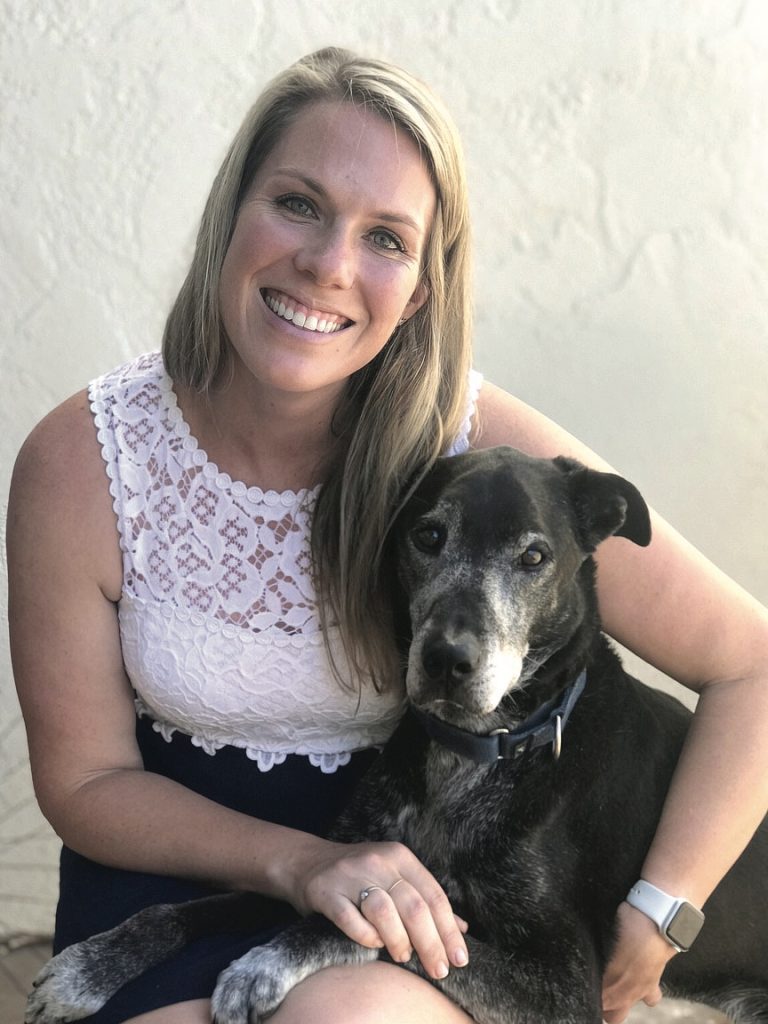
For more than 20 years, Emily Grossheider has steered organizations across the U.S. working to advance the well-being of animals, especially senior dogs. Hailing from the Bay Area, Emily moved to Santa Barbara to attend UCSB, and has been there ever since. Volunteering at a local animal shelter unlocked a change of heart that inspired her to transition out of plans for a legal career and into the world of animal welfare. She earned a Certified Animal Welfare Administrator accreditation, and a master’s in nonprofit management, and went on to serve in leadership of both local and national organizations. She is currently the executive director of the Grey Muzzle Organization, which partners with animal welfare organizations nationwide to fund programs designed to improve adoption outcomes, reduce shelter stays, and help senior dogs remain with the families who love them. Most recently, they have launched an incubator grant program to help small organizations with funding, mentorship, and capacity-building. Emily’s efforts have fostered safe, dignified golden years for countless canines. She is truly a senior dog’s best friend.
Jonas Oppenheim: I’ve got my 20-year-old cat with me here. So I will be very provocative and ask, why dogs?
Emily Grossheider: I have a cat too, who I love just as much as I love my dogs. From my perspective, and our organization’s perspective, there’s only so much you can take on and still do well. I would venture to guess that anyone who represents an organization that serves only dogs would say that they love all animals. But we’re genuinely grateful for and relieved by the expertise and dedication of the groups that focus on cats and other animals, because they do that work so much better than we ever could. Everyone taps into their own strengths to help the species and the animals in the segment that they’re best equipped to serve. We only do senior dogs at my organization, and there are plenty of puppies right now in shelters that people care about just as deeply. It’s finding the segment that you can help and that you can support most holistically, trusting that others will bring their own expertise to the rest.
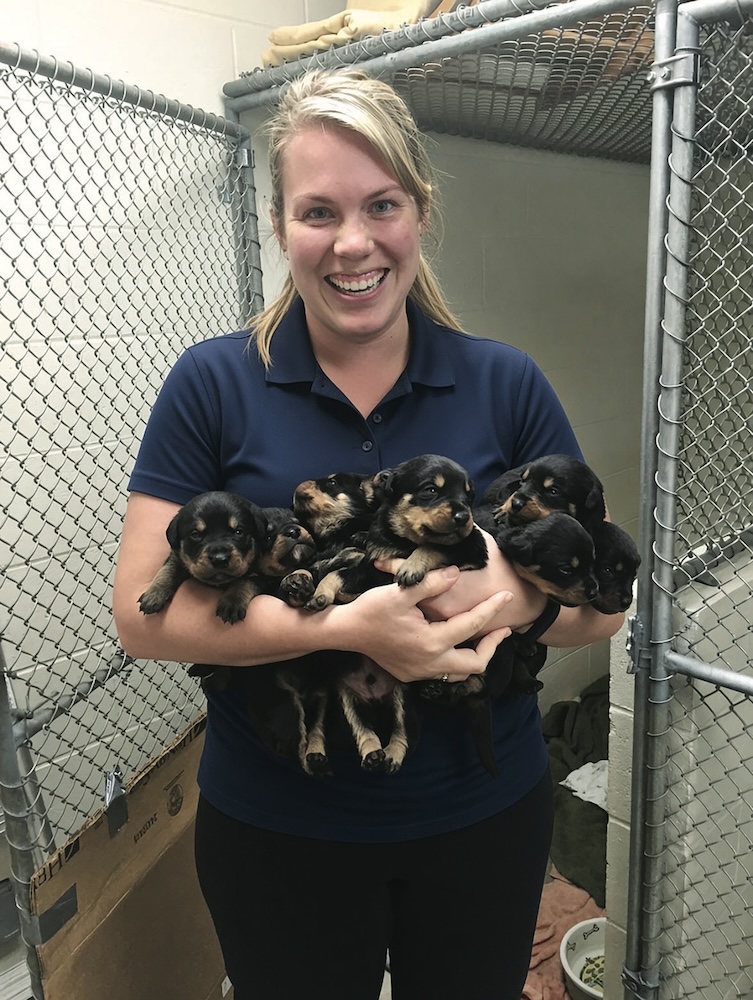
JO: We care about humans, of course, but we LOVE our dogs. What is it about helping animals that really pulls our heartstrings?
EG: Everyone who’s an animal lover has had an experience that they would say that they couldn’t even describe. That the relationship they’ve had with their pet goes beyond words or description. That the word “pet” feels like an inadequate word to even describe what they are. And so I think that words fail when talking about how important pets are. One reason for that is they don’t have a voice. So people feel empowered to be a voice for the voiceless. But beyond that, there’s power in our pets not having a voice, because words are so frequently the least interesting part about how we communicate. Helping animals and being part of that animal-human relationship really has to rely upon that connection that doesn’t have any words either.
JO: What set you on this specific path towards animal welfare? Was there a special senior dog in your life?
EG: My first dog that I ever owned on my own was named Blackjack. He was grumpy – I always say that he was a very bad boy but he was my bad boy. He definitely taught me a lot about animal welfare in general. I saw him become comfortable and so gentle in his senior years. As a result, I had a lot of appreciation for what seniors have to give. I also had some experiences at the shelters that I was working at, with dogs that were adoptable, and seeing how unfair it was that they were passed over because of age. And so you look at your own dog – the one who has given you years of quiet loyalty and love – and suddenly wonder: if something happened to me, would this dog be forgotten and left behind, too? That question hit me hard. It was the moment I realized how many senior dogs face that exact fate, and why I can’t look away.
JO: Do you have a through line for all these organizations that you’ve worked with or an overarching philosophy to your philanthropy?
EG:
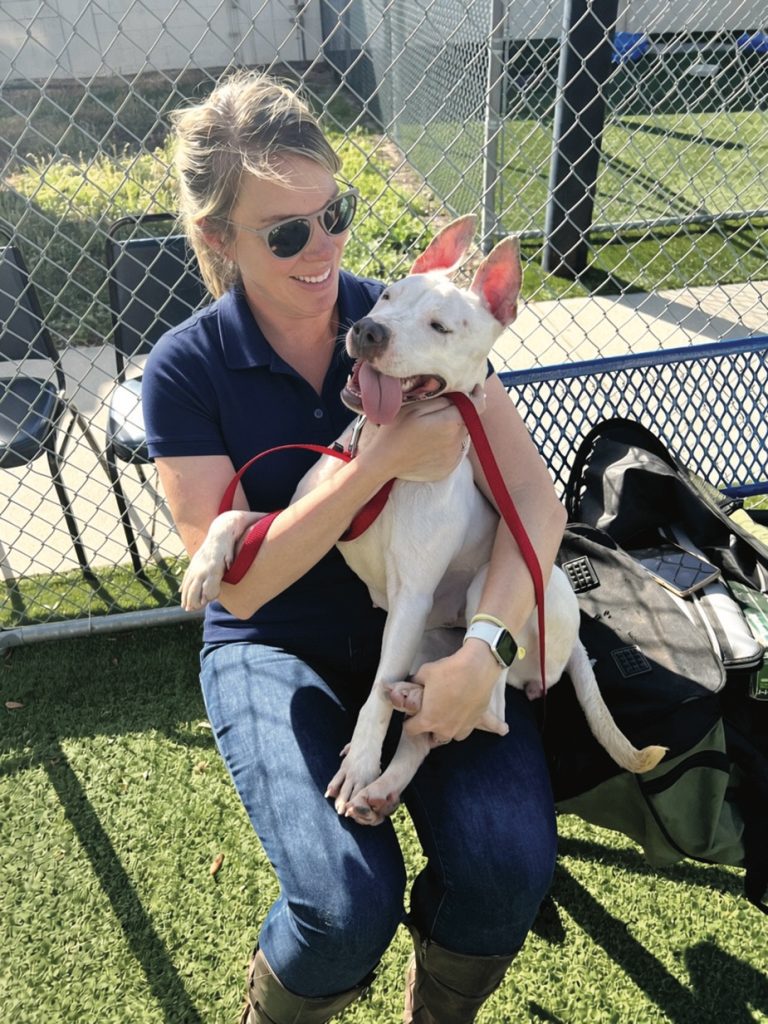
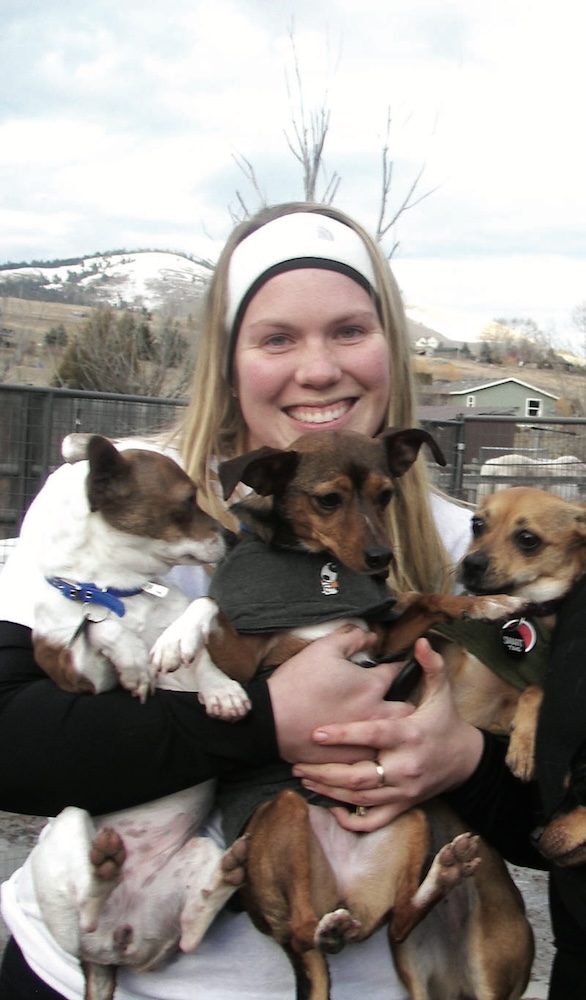
I think that staying open-minded is a really big part of it. And celebrating success when you have it. I recently found a picture from over 20 years ago. It was when I was running a shelter in Santa Barbara. I had found out that there was this need, that there were no small dogs in the Northwest even though people wanted to adopt them. Meanwhile, here in Southern California, we were overloaded with small dogs. We could provide for them for years and years and years with no problem. So I put a press release out and it was published in the press. And overnight, we had $25,000, which at the time had been by far my largest fundraising success ever. The pictures were of me transporting these dogs in the middle of winter to Montana, where they were then quickly adopted from there. What I’ve learned is that when something works, you build on it – you pay attention to what’s effective, adjust what isn’t, and keep going. And just as importantly, you shouldn’t be afraid to ask for what you need. People genuinely want to help close those gaps and be part of the solution.
JO: You’ve worked in and outside of the animal world. Are there different approaches or different vocabulary that you use in philanthropy around animals versus human-based causes?
EG: I’ve worked in both animal and human-focused philanthropy. While the approaches and vocabulary can feel different on the surface, the core is remarkably similar. We talk a lot about being “humane” in animal welfare because animals lack a voice to tell us what they need. With people, seeing someone’s humanity feels more concrete since they can often describe what’s missing. Yet even in human philanthropy we advocate for those whose voices are quietest. The work isn’t wildly different. There’s a deep connection, and all philanthropy depends on the generosity and selflessness of others.
JO: You’re the executive director of Grey Muzzle. What have you learned from serving in nonprofit leadership?
EG: Oh, it’s been very humbling. I think that what I’ve learned is that we’re always learning. The more you learn, the less you know, right? Something will always surprise you. I think that being involved, by steering the ship, you learn a lot about how easy it is to make a mistake, and how easy it is to get things wrong. I’ve learned that my role is really no more important than the volunteers who are showing up. Each experience has added additional responsibility but with that responsibility comes not always feeling like you know what you’re doing, and getting more comfortable with taking risks. You understand that sometimes failure is not an option, but the status quo isn’t either.
JO: When you’re talking to your donors with the firmament of so many worthy causes in the world, how do you make your case?
EG: I do think that philanthropy can become so competitive instead of collaborative, and I think that that’s where sometimes we fail. Even if you’re not being supported, if another organization is doing the same thing that you’re doing, that’s still a win. So we have to look at philanthropy as the greater good in our entire sphere.
JO: What makes you happiest about this work?
EG: Two things stand out. The first is simply witnessing the power of human companionship. People sometimes assume I care more about the dogs than the people, but some of my favorite moments come from hearing how deeply people love their own pets. The truth is, caring only about the animals would not solve the larger problem. We also have to support and value the people who will love and care for those animals. That human connection is by far my favorite part of the work.
The second is seeing the tangible results of hard work by so many people. That includes donors who have worked diligently throughout their lives and now choose to share some of what they have built with animals and families who need it most. It also includes the quiet victories at shelters. For example, after we awarded a grant this year to the Santa Barbara County Animal Services, they shared that the funding allowed them to waive adoption fees for a bonded senior pair that had been waiting eight months. Placing a bonded pair is already difficult because a family must take on two animals, and senior dogs add another layer of challenge. Hearing that those dogs finally found a home was incredibly meaningful.