Victor and Susan Schaff: The Seeds of a Family Legacy
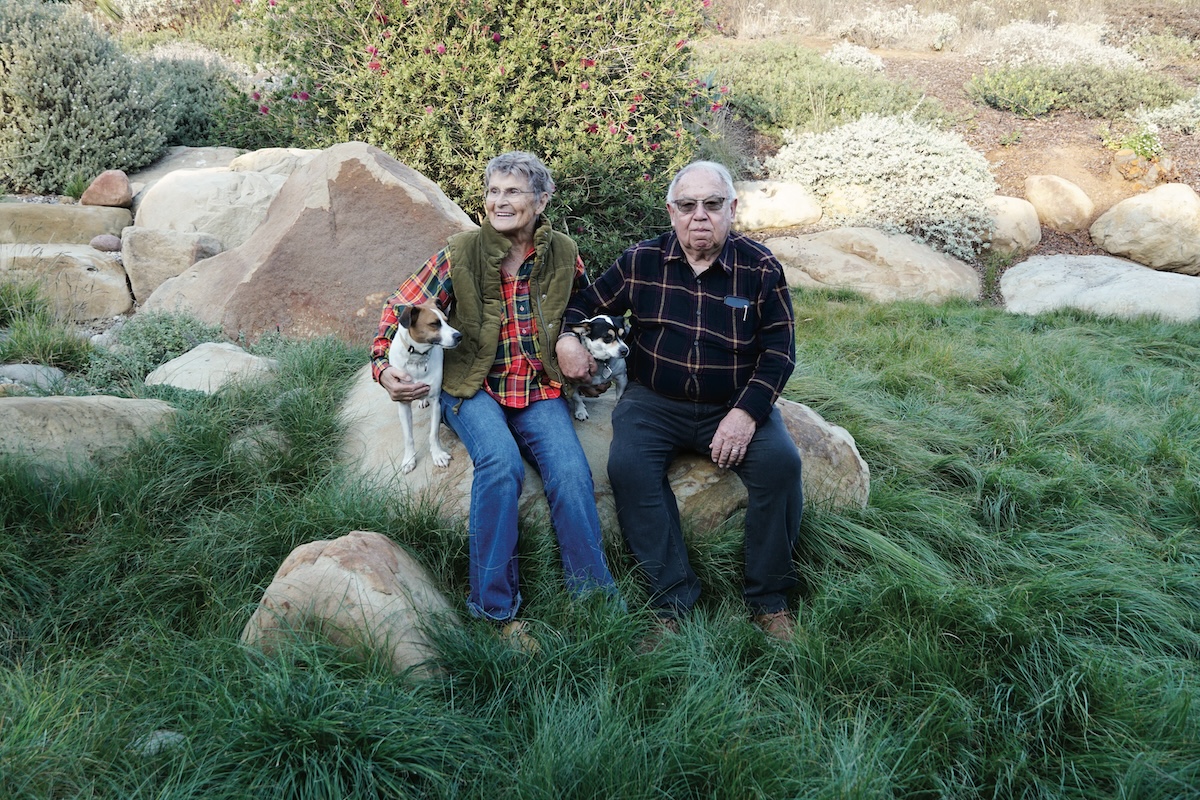
You might say the seeds of Victor and Susan Schaff’s careers were planted in the post-WWII Midwest, when the soon-to-be husband and wife, who finished at the top of their high school classes, grew up on ranches and farms in North Dakota before starting college at the state university. When Susan’s parents retired in Santa Barbara, the couple also came out west to finish their education at UCSB before founding S&S Seeds in 1975 to help Southern Californians address the growing need for locally-sourced native seed.
“I don’t know if our experience on the farms helped me much when I got to farming native seeds,” Victor recalls. “It was all based on having driven across the desert coming to California, seeing that housing was coming to Victorville in 1964, that got me interested in native seeds that would be able to exist without irrigation. And maybe it was the traditional and old-fashioned work ethic that helped us more.”
Whatever it was certainly worked.
Over almost half a century, S&S grew from collecting seeds in the wild to setting up production farms for native seeds to meet the demands of the ever-expanding population of Southern California, eventually expanding across the western United States. The Carpinteria-based business grew organically and exponentially, eventually also expanding through acquisitions. At the same time, the couple also got involved early on in real estate, with both businesses able to capitalize on the explosive growth in SoCal.
The Schaffs’ efforts in environmental restoration also connected them with numerous causes and organizations throughout the area, and the couple began supporting ecological and social initiatives in Santa Barbara County. Five years ago, after retiring, the Schaffs established the Schaff Family Foundation to focus the family’s philanthropic efforts, both for today and the future. In its first three years, the foundation awarded 120 grants totaling $1 million to nonprofit organizations. The causes range from a wide swath of environmental and botanical organizations to alcoholism and drug treatment centers, homelessness, mental health, food banks, humane societies, and boys and girls clubs.
But the future portends much more, even if the foundation remains a mom-and-pop shop, as the Schaffs are planning on the passing of hundreds of millions of dollars to the foundation as part of their estate.
Steven Libowitz: When and how did you get involved in philanthropy alongside your business interests?
Victor Schaff: We started gifting almost 20 years ago, well before the foundation. At first it was mostly groups that were in the reclamation and re-vegetation areas, professional organizations that were related to the business we were in. But then it broadened in many directions, particularly after we realized that there were a lot of people that needed help out there, and we began to include homelessness, mental health, etc., in who we were supporting.
As time went on, the other big shift was during Covid. I couldn’t believe that people were lining up for miles just to pick up a bag of oranges. Even some of the same people who worked for us, not just those on welfare, had food issues, which is when we expanded into the Food Bank. The breadth just kept growing.
SL: What prompted you to launch the foundation?
VS:Well, there was an interest from both of our daughters, who had worked at the seed company, to be involved with nonprofits. We had hired somebody to come in and help us with estate planning, and we realized that our children felt that when they got to the later part of their life that they would want to be involved in giving as well. The foundation came up to formalize the giving, so that when we’re gone, it continues on. And it made sense that instead of giving our children ownership in all of this real estate we’d arrange an annuity so they could continue with their lifestyle, but the balance would all go to the foundation. The idea is to give to local places that help people who haven’t been as fortunate as we are. Not everybody is able to get out from under – barely being able to buy enough food for themselves. And we have these excess resources. Why not see what we can do to elevate or help out these people, provide a leg up so that some of them might be able to get ahead enough in life where they don’t have to depend upon other people all the time to survive.
SL: There’s an inherent value in wanting to use your wealth to make a difference in the world rather than having a yacht or a big private plane or passing it on to a future generation. What has informed your decision to go this route and make giving back so important?
VS: My wife and I don’t live the lifestyle that we could have with the income and assets that we have. We never counted money. I was more interested in making deals in real estate and/or doing things that satisfied me when we were running the seed company. It never was about how much we could make this year. We wanted to make enough money to keep it going and growing. So we didn’t pay attention to making more than that or how to spend it. So it was a bit of a surprise to realize that this thing (our assets) became as big as it did. I never imagined that there’d be $200-$300 million of net equity. And since we didn’t live lavishly, the kids didn’t really know that there was this large amount either.
SL: And now the family is involved in the business.
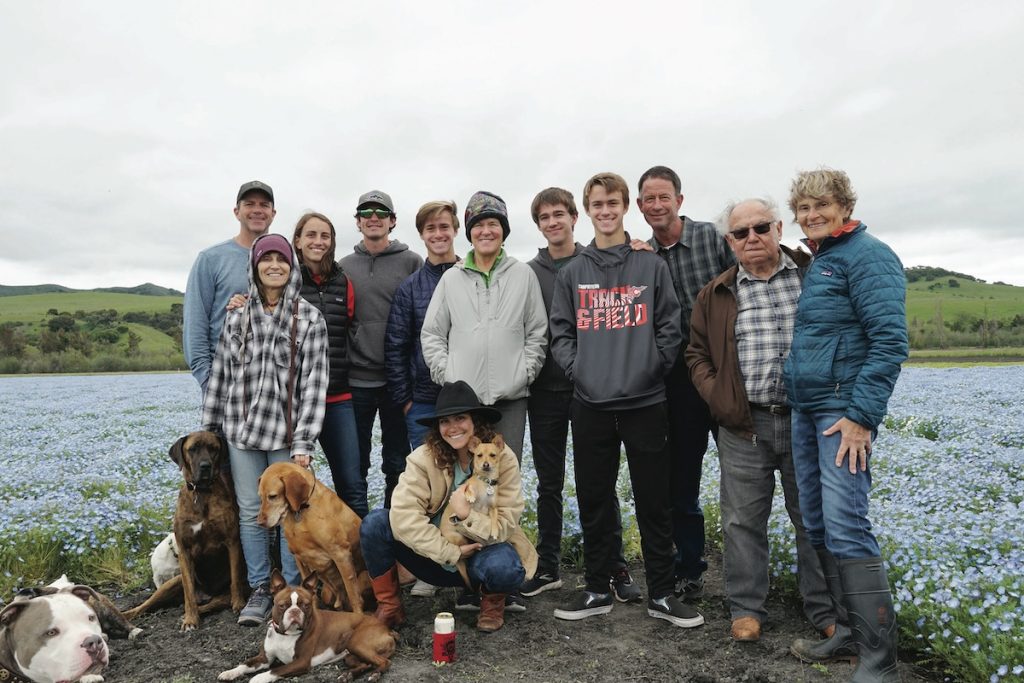
VS: It’s great that my daughters are both really interested and are stepping up even if their opinions about what to support may be somewhat different than mine. We want to formalize it so that in the future, the amount of money we can give will increase dramatically as time goes on, and to make sure it’s going to be used to take care of the needs that we thought that they were going for. We were busy people trying to keep our businesses going even as our daughters moved into other areas. Now all of a sudden we have a common interest, so it’s become a family thing rather than operating in separate lives. It’s brought our family together a little bit more and that’s been very satisfying.
SL: How are you balancing the desire for flexible funding and putting your trust in organizations you want to support with the need to measure impact?
VS: We took the list of the organizations we had previously donated to before we set up the foundation, maybe 50 or so, and asked them to go through the formal process of submitting to get a grant. If it’s over $10,000, they have to give us very detailed balance sheet information, their mission, what is the purpose of this particular request they’re making. Then each of us on the board, my two kids and my wife and I, individually go through all of that information and write down our thoughts. In some cases, maybe we don’t want to give them anything. In other cases, we write down what the amount that we think is appropriate.
Then we have a meeting and go over each of the inputs with our consultant and come to a conclusion of what to do. It’s only been once so far that we’ve been doing it that way with the foundation, because it was just Susan and I donating to the foundation privately. But once we’re gone and it’s fully funded, I’m sure it will change dramatically.
SL: The foundation’s mission statement focuses on people who are vulnerable or at risk. How has that informed your decisions of donations and might that change in the future, including choosing between long-standing large nonprofits and ones that are just starting out?
VS: There is a lot of need out there and while we have a lot of assets, it’s still very little compared to the challenges that so many people have. We support the Foodbank and Unity Shoppe, for example, because it’s pretty evident that they’re doing a lot of good things in a lot of places. It’s about $100,000 a year, which we’ll probably expand tremendously over time. But we also want to include some of the new nonprofits, even though we know they may not survive, along with smaller nonprofits. We’d like to spread our gifts around, especially for those where the money really goes toward the end result rather than administration. In some cases, maybe we won’t make the best decision as to where we give it but we want to take a chance on new organizations who might make a big difference eventually.
These smaller organizations are so busy when they’re all still volunteer-based. Even when they have people on the board, they’re just not putting in enough time to help that organization achieve what they want. If we can be that bridge for them, help them by providing enough operating capital so they become more professional, so that they can achieve their goals, we want to help, even though it might be a little risky.
SL: Did you do that for your own foundation? It’s family-run, with no official employees, although you obviously have extensive business experience?
VS: We hired someone as a consultant to help us get the foundation off the ground because we didn’t have enough knowledge in that area about how to set it up to function and operate efficiently. Now the intention is once it’s running smoothly and doing what we want it to do that our daughter Jody might take over that role.
SL: Jody, can you share your plans for the foundation?
JM: There are still a lot of unknowns on how all of this is going to come together, which is making it very fun and exciting to explore. I’m focusing on learning more about the different places that we’ve given money to in the past and trying to get a better understanding of all the functions of the nonprofits. I don’t have a set plan yet. So right now it’s very much about educating myself by being involved in the whole process. There’s so many things we can do, so we will continue to learn what that is and hopefully make good decisions about where we go in the future.