Finding the Intersection of Joy, Philanthropy, and the Dewey Decimal System
Librarians should probably run the world. They’re already custodians of humanity’s assembled knowledge, presiding over safe public spaces, and occasionally banding together to resist government overreach (ask your librarian about the Patriot Act). All they ask in return is that you keep your voice down.
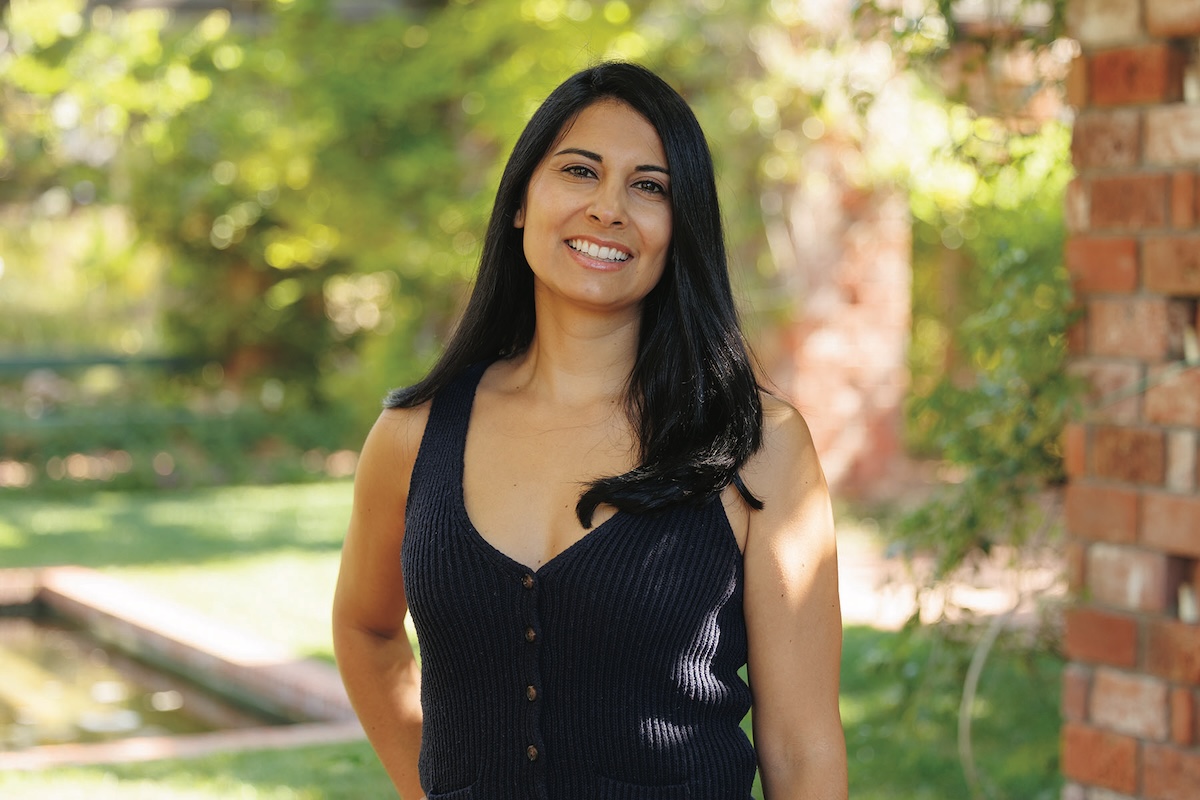
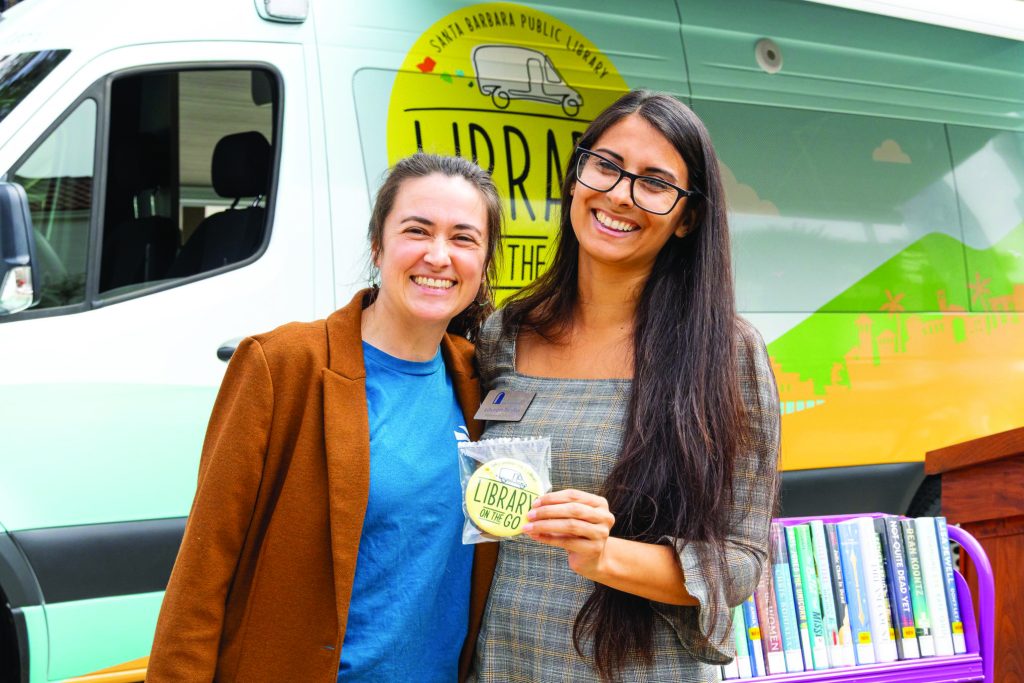
Well, that’s not all they ask. Lauren Trujillo, the executive director of the Santa Barbara Public Library Foundation (SBPLF) – and a Master of Library and Information Science – often finds herself asking wealthy people for large sums of money. She has led the SBPLF for the last eight years, and today she is a true powerhouse in California’s philanthropic landscape. She currently serves on the boards of the Environmental Defense Center, United for Libraries, Women’s Literary Voices, and more. Recently, she received the Latino Business Award from the Pacific Coast Business Times.
Trujillo’s passion for service and community was planted in her upbringing, in a working-class family in Crescent City. “It wasn’t a question of whether you go out and help people – it was a part of our daily practice, part of our identity.” She was a first-generation graduate from UCSB, and later settled in Santa Barbara, where she pursued her interests in archives, history, and social justice while earning her master’s.
Jonas Oppenheim: You are involved with so many organizations and causes. What is the throughline that connects you to all of them?
Lauren Trujillo: I’m very much a values-driven person. So I am looking into causes that align with my values, whether that’s empowering women, lifting up our future generation of leaders, people of color. Most recently, getting involved with the Environmental Defense Center felt like it wasn’t a “want to,” it was a “have to.” We’re in this moment in our society, in our world’s timeline, where we all have to do something about the environment. And for me, where that intersected with my values was environmental justice. I thought, I have to do this work at this moment and step into this space. And I think that’s what drives a lot of my colleagues. There’s need everywhere. We have to do something about it. And we want to take action and be a part of that change or inspire the people who will help make that change.
JO: You became the executive director of the SBPLF at age 24. What did you think that job was going to be? And what have you learned from it?
LT: I felt I was “Mr. Miyagi-ed” in this position. I had to learn that “wax on, wax off” – in other words, the foundational components of getting to more meaningful and connective work.
JO: I love turning Mr. Miyagi into a verb.
LT: Mr. Miyagi-ed! When I was offered this position, fresh out of library school, I knew I was going to have to use those fundamentals of course work, nonprofit experience, and entry-level development in a minor way compared to my knowledge of libraries, but it became a moment of, wow, I’m grateful for every tool I picked up along the way. My two worlds collided, and I thought, oh, this is actually going to be a lot more nonprofit fundamental work from my lived experience and a little bit of that cheerleader advocacy I left my library program radiating.
I quickly learned that there are a lot of moving parts. When you take an executive leadership role, you wear a lot of hats. Doing major fundraising in this community requires a lot of relationships. But I was able to find a rhythm that allowed me to focus on building those relationships and building this organization. I also had incredible mentors, guidance, and board members alongside me to help coach me through that process. Because I was so young, I had no problem asking for help. A lot of leaders come into this position and are expected to know it all, and are not always eager to ask for help. I hope I never stop asking for help. I don’t want to claim to know it all. And I’m always learning something in this position.
Now here we are eight years later. Is it what I thought it would be? Absolutely not. Am I a whole new person because of it? Yes. And the librarian in me is so encouraged every day to take what I’ve learned and help others. When I see somebody encountering a problem similar to something that I faced in the beginning, I go and say, let me help you get there faster. And maybe I could learn something from them, too. So it’s feeding this bigger system. Because I know if I can help them, it’s actually helping us all.
JO: In a world with need everywhere and chronic shortage of funding, how do you get people to support your organization and not someone else’s?
LT: I like to look at Santa Barbara and our community with a mindset of abundance. There’s plenty to give and go around. How can we connect you to what’s most meaningful for you? In fundraising, it’s your heart, then your head, then your pocketbook. We have enough capitalism on the day-to-day. So I’m not coming into fundraising or philanthropy with this mindset of sharpening my knife. Rather, it’s how can we collectively feed this ecosystem, and help folks who care about social-sector services see the big picture. And see how my cause and other causes they care about feed into solving the bigger problem. If I’m not that entry point for them, I’m happy to make the introduction to another organization that’s a better fit.
Alternatively, the entry point for folks might actually be the library. They may also care about the opera, history, music, art, and other cultural heritage institutions that are being impacted right now and learn about it through the library. I feel honored that the library is centered in a lot of our community work. My background is in library sciences – technically, I’m a librarian, so the mindset that I bring to this is that we just want to help everybody. We want to give everybody the information and connect them to the best resource. The Santa Barbara Public Library is all about not duplicating services and calls on experts and partners. Again, it’s perfect for me to say, thank you for supporting us, and please go and support this other entity that’s doing good work alongside us. Hopefully everyone is sharing in that spirit.
JO: How would you connect happiness and philanthropy?
LT: I think that if you’re involved in philanthropy, whether it’s through volunteering or through making a contribution or through participating in a program yourself, it feels so good right now to be in community or to feel part of something bigger. That’s the joy I think that philanthropy brings. I think it’s at the top of Maslow’s hierarchy of needs. You have your basic needs at the bottom, and then housing, shelter, job. That top peak of finding meaning in the world and in your life is where I think philanthropy comes in. To be a part of something. As an employee of the sector, it’s so fulfilling, but oftentimes we can get pulled into the minutiae of work and it becomes work. It is so important to step back and remind ourselves that this bigger impact that we’re having on our community is there. It’s bigger than us. And we’re all moving the needle in these different ways.
There’s a Japanese book that a mentor just gave me, Ikigai, that shows the four sectors of being. If you can center your values and your passions in all the decisions you make, then you are set to live a happier life. (Again, I’m a librarian so I cite my sources.) It’s such a good book and resource that highlights the organic intersection of joy and philanthropy, of passion and mission. So I think that says something, when you’re leading with those types of mantras and values in your day-to-day, your happiness aligns. When you look at all the nonprofits that are in our community, you’ve got a kind of a crossing of those two worlds. You’ve got individuals who can connect to that joy through giving or through volunteering and participating, advancing and connecting their businesses through those decision-making processes, and you’ve got those working in the nonprofit sector who found their passion, found their values, and are centering how we connect and work with each other in that space as well.
JO: What is it about Santa Barbara that keeps you here and so devoted to its community?
LT: I came here to go to UCSB in 2012. After graduating I lived in Washington, D.C., then San Francisco. When I left San Francisco, I knew I would be grinding in Santa Barbara just as much as I would be there. But at least I had community here. I had people, my neighbors. If I was laying in the street, people wouldn’t step over me here. Santa Barbara has the community piece I was missing from other big cities.
My early internship days were at the Mission Archive Library, the Trust for Historic Preservation, and then I ended up working three years at the Santa Barbara Historical Museum. I became deeply embedded in the history of our community and the people who built this community and culture, and the stories that we often don’t hear. I think we are seen by the outside world as this very privileged place, the American Riviera. But there is so much need here and there are so many stories about your average people who are just making it. To uncover those stories as I was working in these institutions drove me closer to the community.
Then, getting into the philanthropic sector the way I did through this position led to meeting community members who just want to see their library improve. Working with the community that serves those experiencing homelessness to help find solutions for those issues. You just get this broader tapestry of all these people who are contributing and want to see this community thrive. I mean, I go to our city council meetings for fun. Our public comment is so interesting. And I just love to see this care that so many community members bring and expect and want. It just keeps pushing us to support and be there and want the best. It takes communication, collaboration, and more people looking at how we can best connect people to where the problem can be solved. So I see full potential for us in this little town in California, leading the way on so many issues. We have the resources, we have the people, we have the community.