Leveling thePlaying Field so All Youth Thrive Through Sport & Play
Ten years before the World Cup came to Los Angeles, the Play Equity Fund was already asking a question most sports organizations never think of: not the obvious – how do we build better athletes – but more importantly, why don’t more kids get the chance to play? The Fund’s lineage goes back to 1984, when Peter V. Ueberroth ran the first privately financed Olympic Games.

When the 1984 Summer Olympic Games in Los Angeles closed with a surplus, 40 percent stayed in L.A., giving rise to the LA84 Foundation, which has been reinvested in local communities to ensure youth can participate in sports, play, and movement. Among its longest-running commitments is teaching kids to swim: for more than 40 years, LA84 has funded water-safety instruction across Southern California, reaching over 200,000 youth.
But the Foundation’s leaders discovered grants alone couldn’t close what they call “the play equity gap”: kids were increasingly priced out, cut off geographically, or simply born on the wrong side of a socioeconomic line that determines who gets to play on a team and who doesn’t. So, a decade ago, LA84 established the Play Equity Fund, a public charity built to venture upstream into community partnerships, data, and legislation. Unlike LA84, whose reach is tied to the eight counties that hosted Olympic events in ’84, the Play Equity Fund carries no geographic limit, though its work is concentrated in California.
A Place to Belong
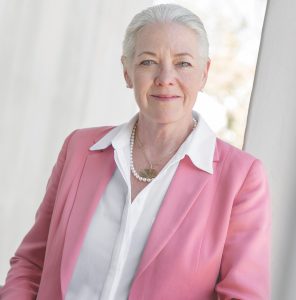
The organization’s President Renata Simril understands that grassroots sports organizations “did not need another organization competing with them for funding or recognition. What they need is a partner.” That distinction shapes everything the Fund believes and practices. This year, the partnership approach won its biggest fight yet. The Youth Sports For All Act, sponsored by the Play Equity Fund, was signed into California’s budget, making the state the first in the nation with a commission studying a centralized system for youth sports access. It followed SB 291, another Fund policy win guaranteeing every California public-school student daily recess and that it cannot be taken away as a form of punishment, in effect since the 2024-25 school year. “Every child deserves a system that makes opportunities possible,” Simril says. “That is the legacy worth building together.”
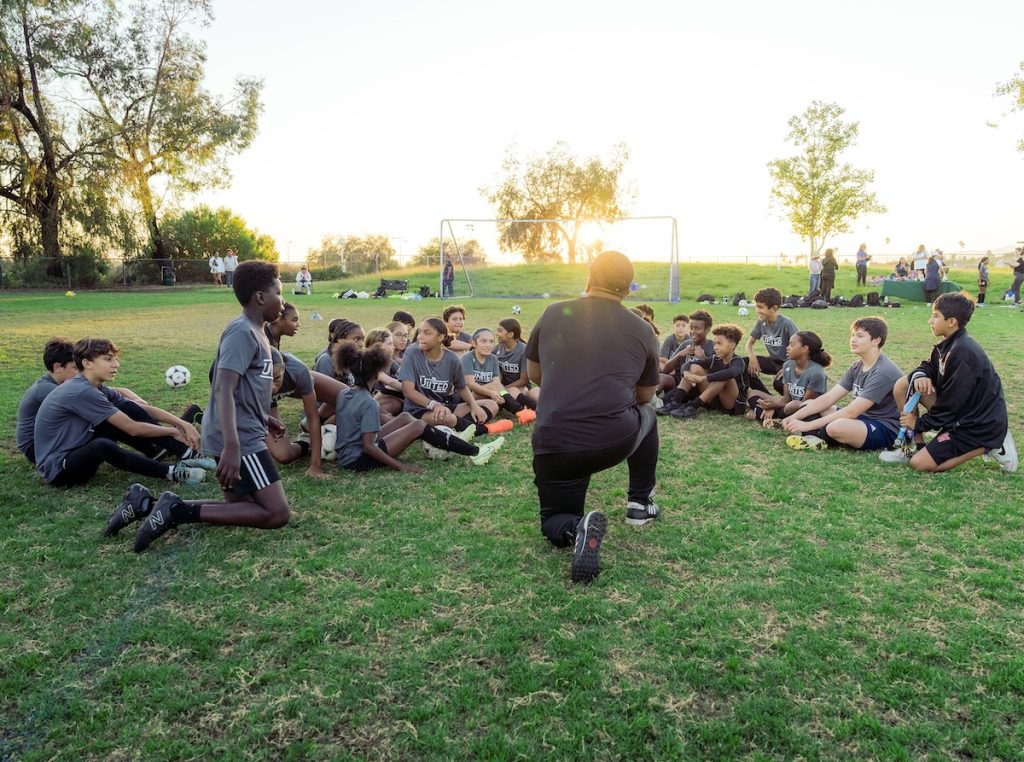
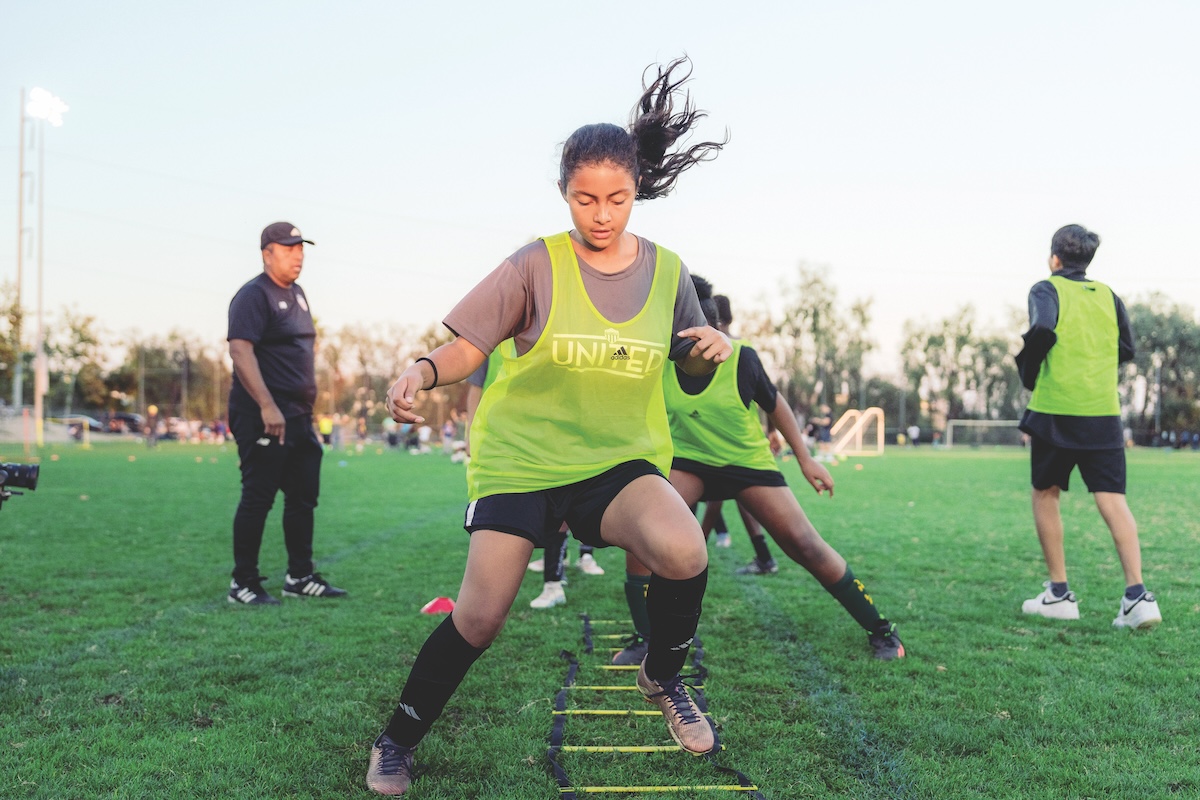
That heritage includes a World Cup legacy program that brought soccer clinics to players, coaches, and referees across L.A. County and 26 grants to grassroots soccer nonprofits. A Super Bowl legacy program expanded access for youth to sports programs, trained coaches, and equipment. Recently, the Fund refurbished a basketball court at Crenshaw High School and threw a Play Day block party in West Adams that drew 3,000 people; in Long Beach, a partnership with Nike focuses on keeping girls in sports. In Altadena, where wildfires closed local parks, the Fund helps provide the “Park on the Move,” a van packed with balls, hula hoops, and an obstacle course, bringing the playground to families directly. It arrives at a sensitive moment, as private investment reshapes travel leagues and training academies nationwide.
Simril doesn’t mince words: “Private capital may see youth sports as a market. We see it as a public good.” She has described this work through an allegory: for years by providing access to the lifelong benefits of youth sports, LA84 was pulling out kids who were floating down a river. The Play Equity Fund’s mission is moving upstream to discover how kids are ending up in the river. It does so by addressing immediate needs, as well as through pursuing policy reforms and systems change for long-term, sustainable impact on a larger scale.
That work was auspiciously evident this year at Camp Paige, a juvenile facility in La Verne, where two flag football teams played a championship game. The final score barely mattered. What mattered, she observes, was boys learning to “lose without losing yourself, win without humiliating someone else” – not football, she says, but life practice.
Simril distills it like this: “We should never forget the simplest truth. Play gives young people a place to belong. It gives families a reason to cheer.” The case, she says, for treating play not as an extra but as essential.
The Play Equity Fund
Donate now!playequityfund.org
President: Renata Simril
Mission
To build pathways to an enriched life through sports, play and movement for all youth in schools and in community.
Begin to Build a Relationship
We know you care about where your money goes and how it is used. Connect with this organization’s leadership in order to begin to build this important relationship. Your email will be sent directly to this organization’s director of development and/or Executive Director.
I believe sport and play can change the trajectory of a child’s life. The Play Equity Fund is making that possibility a reality for more youth, creating opportunity, strengthening communities, and inspiring hope for the future.
Making It a Truly Level Playing Field
Seventy-six percent of California youth are not meeting daily physical activity guidelines, while 60% of families struggle to afford the cost of youth sports.* The Play Equity Fund is raising funds to change these facts and close the play equity gap. Your support will expand access to sport, play, and movement for all youth across California. Sport and play are essential to children’s physical, emotional, social, and academic development.
Your gift ensures that when the world comes to our city in 2027 for Super Bowl LXI and the 2028 Olympic and Paralympic Games, local kids in our neighborhoods aren’t just watching from the sidelines – they will be on the field.
*Source: 2026 California Play Equity Report, LA84 Foundation (May 2026).