A Rallying Cry for Community

Santa Barbara philanthropy is at something of a crossroads, one it’s been approaching for years, but started accelerating toward during the pandemic years. That’s when an influx of great wealth seeking refuge from the gritty realities of dense, urban living made headlines for record-breaking real estate transactions. The glamorous sheen somewhat obscured the view of a region in which increasingly the working-class lives that comprise most of the county’s population came under increasing stress.
As with elsewhere, the chasm between the haves and the have-lesses grew further apart, during and after the pandemic.
Soaring property values and skyrocketing rents have only increased stressors on an area that is struggling to maintain a sense of common bonds and shared spaces in the face of changing demographics and economics.
This crossroads is reflected in recent trends in giving and philanthropy throughout the region. According to the Santa Barbara Foundation’s 2023 State of Nonprofits Report, nonprofit growth in the county lagged state and national trends by more than a percentage point. A majority of nonprofits also reported declines in individual giving. Smaller nonprofits have been hit the hardest.
Pointedly, this year the Santa Barbara Foundation launched a Critical Needs Response Fund “to provide flexible resources that help organizations adapt, respond, and remain resilient in a shifting landscape.” In other words, to help bridge the gaps until the giving landscape improves.
So, what gives – or doesn’t, in this case?
Part of the answer may be the budding identity crisis – is modern Santa Barbara a luxury enclave, a close-knit, transgenerational community, or some reasonable combination thereof? It appears that philanthropy and philanthropic donations are counting on the answer.
Integrating the county’s vast discrepancies in wealth and assets into a cohesive community with shared goals is a challenge, one that its storied philanthropies and nonprofits are confronting in real time.
No surprise, the largest foundations remain in good shape while the smaller ones are struggling to do more with less. Similarly, large donors are accounting for an increasingly large share of the region’s giving, but the giving is coming from fewer hands and going to fewer foundations.
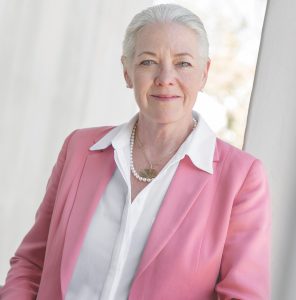
While the best minds in local philanthropy work towards re-democratizing giving, billionaire philanthropist Wendy Schmidt and her husband, Eric, offer an example of how we might better navigate the local philanthropic terrain in the meantime.
As founders of major initiatives like Schmidt Ocean Institute and Schmidt Sciences, along with the Schmidt Family Foundation, the Schmidts are known for their global philanthropic reach. Yet they recently found themselves coming to the rescue of a local fruit market. They had read about the planned closure of the beloved Tri-County Produce on Milpas Street in a local newspaperand decided to reach out as angel investors to keep it going.
The reasons were personal, and very human.
“My husband Eric and I started shopping at Tri-County Produce when we moved to Santa Barbara in the middle of the pandemic,” Wendy Schmidt wrote in a post on LinkedIn, adding that the store represented “a resilient network of local and regional suppliers over four decades of family ownership.”
As Wendy Schmidt wrote in a letter to The Giving List: “I knew we had to find a way for this beloved market to continue serving the community.” The store, and its key stewards – Jaime Desales Sr. and Jaime “Mito” Desales Jr. – had become “an essential part of Santa Barbara.”
We tend to give to what, or whom, we know.
The Schmidts quickly got to know the place and despite only recently becoming a Santa Barbara resident, Wendy Schmidt wasted no time offering local support. She sits on the board of Ganna Walska Lotusland, and the Schmidt family recently made possible the purchase of the 350-acre parcel of land known as Mar y Cel, the largest contiguous undeveloped property in Montecito.
Supporting the food market and preserving the open space, as different as they are on the surface, are on brand for the Schmidt family’s larger focus. As Wendy Schmidt wrote: “Eric and I seek to work toward a healthy, resilient, secure world for all – and that future, we hope, contains many markets, and many clean food systems, like this.”
Talk about global reach with a local focus.
The subtext of this message speaks to something deeper – an awareness that being vitally connected to community is a quality that is sometimes missing at a moment of rising economic inequality, housing shortages, and climate disruptions, and a divisive political ethos centered on who does and does not “belong.”
Uniqueness of Santa Barbara
There is a uniquely strong culture of philanthropy in Santa Barbara County. It has among the densest concentrations of nonprofits in the country, with the nonprofit ecosystem representing the second-largest employment sector in the region (after UCSB). The Santa Barbara Foundation is one of the most impactful community foundations in the nation, and the Women’s Fund of Santa Barbara, with more than 1,400 members and 265 volunteers, is one of the largest giving circles in the country, having disbursed $1.25 million to local charities this spring.
And in concert with national trends, the total number of dollars raised within Santa Barbara has increased in recent years. The 2023 State of Nonprofits in Santa Barbara County report, presented by the Santa Barbara Foundation and UCSB’s Center for Evaluation and Assessment (CEA), reveals that financial support of local foundations continues to increase year over year.
At the same time, the report signals a shift in another, perhaps equally important metric: the declining number of people both volunteering and giving financially. In other words, our nonprofit sector is increasingly reliant on more dollars being given by fewer people.
National studies indicate the same thing. In the spring of 2025 the Fundraising Effectiveness Project (FEP), a collaboration between the Association of Fundraising Professionals (AFP) Foundation for Philanthropy and GivingTuesday, published a paper raising the alarm that volunteering and board involvement was still below pandemic levels.
The issue is dire enough that The Giving Institute created the Generosity Commission in 2021, a blue-ribbon panel with broad academic and foundation support, that confirmed in its 2025 report that “with rare exception, year over year more money has been given to nonprofits but by fewer givers. And year over year, more hours have been donated to nonprofits but by fewer volunteers.”
This has huge implications for regional organizations and the communities they serve, who are uniquely dependent on local support and less likely to be the beneficiaries of mega-funders. It’s especially the case for organizations like food banks, animal shelters, or mentoring programs that are heavily reliant on volunteers who free up time for staff to do work they are best suited to do.
On an even deeper level, as Generosity Commission Co-Chair Jane Wales explained in the study’s introduction, the “trends in everyday giving and volunteering have occurred alongside two others: a rise in social isolation and a decline in social trust.” When the question becomes to give or not to give, it’s easier to opt out when the social fabric has become so frayed.
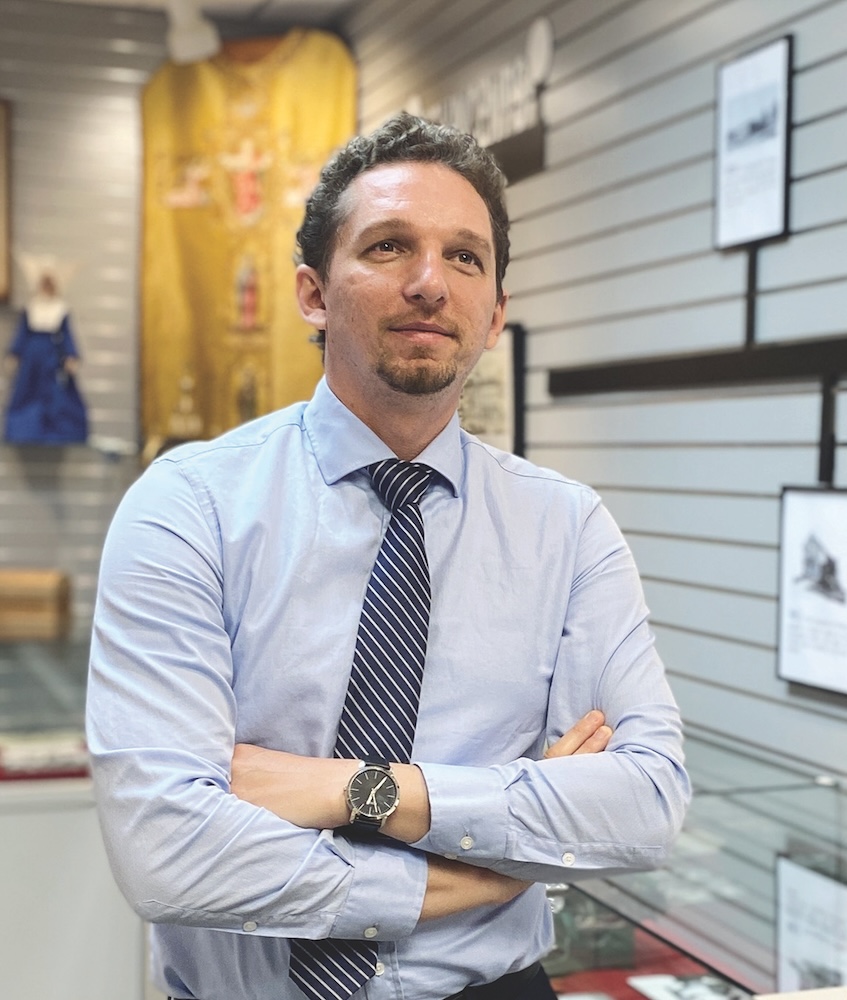
Volunteering is one way to mend that social fabric. Sergey Salushchev is the major gifts officer at St. Vincent’s, a storied Catholic nonprofit that focuses on family support, early childhood education, and housing.
Founded in 1858, the organization relies heavily on volunteers, drawing mostly from a pool of retired Santa Barbarans who feel a deep connection to the work. Salushchev sees the organization’s volunteers as rock stars. For example, when volunteers who work on one of their signature programs that support unhoused people go on vacation, Salushchev says, “They tell us, ‘Please don’t give up our spot!’”
At the same time, Salushchev acknowledges a concerning trend in the national conversation about generosity and giving. “There is a major shift happening in our country, where people have become hostile to compassionate giving,” he said, adding that influential voices increasingly “castigate those who want to help. This makes people less giving, and less willing to give.”
There are significant voices making the opposite case, including the Schmidts, and funders like Bill Gates and MacKenzie Scott who, along with their massive gifts for larger global ventures, advocate strongly for involvement in and support of local organizations. But if these giving and cultural trends continue, the involvement and innovations of a small group of dedicated funders will not be enough.
Back to Basics
With Santa Barbara at a crossroads, the path back to community may be the best one for us to take.
St. Vincent’s Salushchev is proud of his institution’s depth and longevity in Santa Barbara, and how both volunteers and clients, when working together to put food on the table or educate children, are part of the same community.
At a moment when “so many of our problems seem intractable, including homelessness, when you see with your own eyes what you can tangibly do, you understand that you actually can make a difference,” he says.
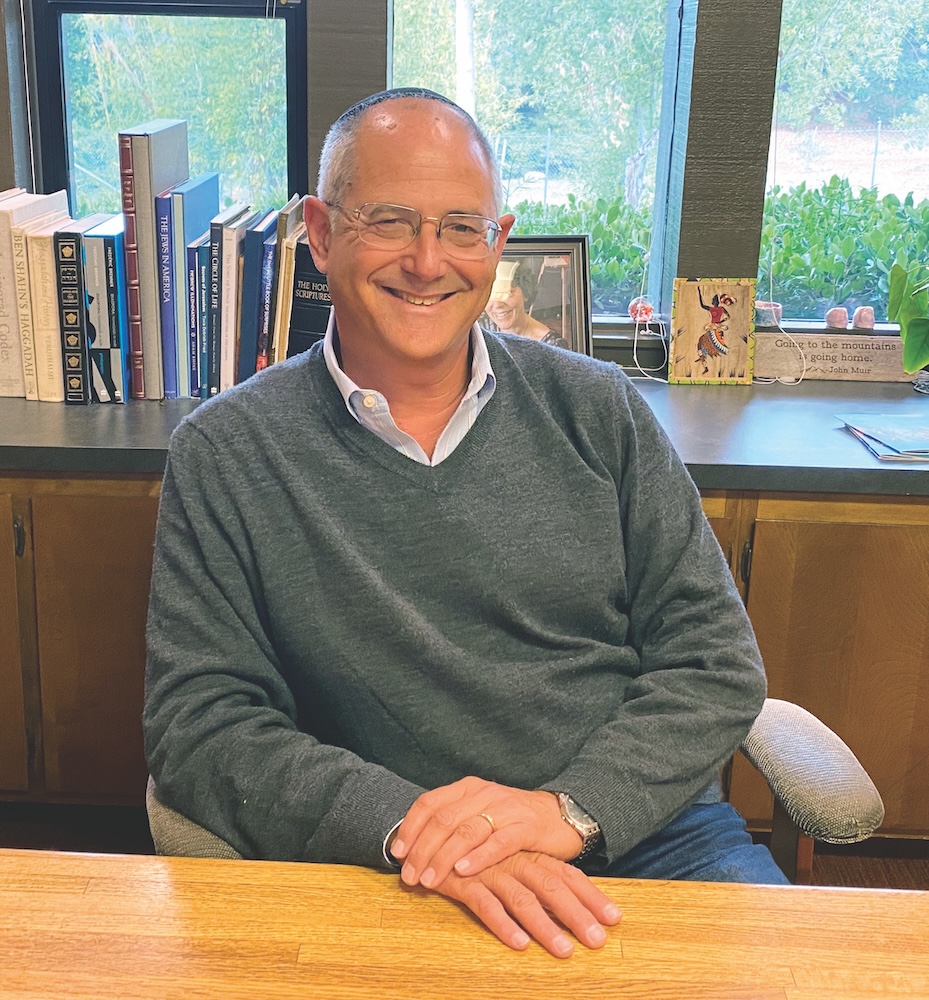
Rabbi Steve Cohen, who became Rabbi Emeritus of Congregation B’nai B’rith this spring after 20 years at that pulpit, explained that people give most effectively and organically when they are connected personally. “People give to people,” he said. In the end, “it’s all about relationships, and the possibility of entering into real conversation with people.”
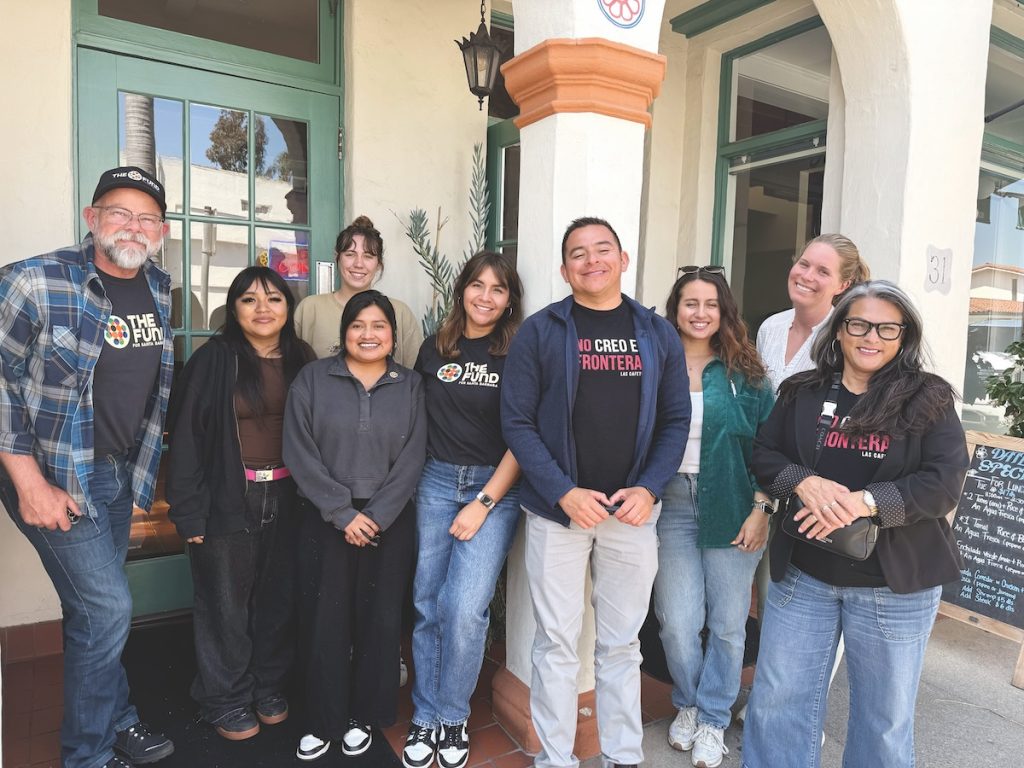
That idea extends to understanding better just who are the people that make up the community’s fabric. For organizations like The Fund for Santa Barbara, a foundation that has supported progressive causes since 1980, the last several months, during which ICE raids have torn families apart and made residents of all legal statuses anxious, have sharpened the sense of mission and the philosophy of community-responsive philanthropy.
“What philanthropy can do in this moment is create an infrastructure of social change, and fund organizations at the forefront of that work as we investigate creative modes to make systemic change through community input,” said Eder Gaona-Macedo, The Fund’s executive director.
Gaona-Macedo, who grew up on the West Side as an undocumented child hiding his status, explained that part of this funding goes to groups dedicated to changing the narrative of who lives – and even who should live – in Santa Barbara. “We have to change the narrative of who lives here, and part of that is recognizing the dichotomy of who has a voice in the larger community, and who doesn’t,” he said.
The question of who belongs in Santa Barbara is not only about legal residency. It’s also who can afford to live here safely, as housing prices and worries about climate catastrophe make buying a home and raising a family in the county feel out of reach, even to those who have lived in the area for generations. And that includes a large percentage of Santa Barbara youth.
One way to bring youth into the conversation is to create spaces for them to raise money, decide on community priorities, and see the impact that giving and volunteering can have.
Kids Helping Kids (KHK), a student-run organization centered at Providence High School, has raised more than $4.5 million since 2002 for both local and international projects. This year, for the first time, KHK will create their own local fund, called Kids Across Santa Barbara, in part to learn more about the issues in their own community.
The Fund for Santa Barbara has its own youth-granting organization, Youth Making Change (YMC), which helps young people ages 13-19 to understand and use philanthropy to make a difference. This past year, YMC granted around $30,000 to youth-led programs throughout the county.
Developing the next generation of volunteers and donors is meaningful groundwork. However, it is not enough to wait for change. As Hillel the Elder said, “If not us, who? If not now, when?” The rhetorical questions are really a rallying cry for community and a sense of personal investment in a community that drives a commitment to helping that community. How can we integrate Santa Barbara, the enclave, with the Santa Barbara that contains multitudes from diverse and disparate backgrounds and socio-economic strata?
The answer, simply enough, is that the enclave is not separate from the rest of the community, and what’s good for the community – a healthy environment, safe neighborhoods, good schools, food and shelter, the opportunity to stay and thrive – is good for all. Emphasizing those broad common interests over the narrowly divisive narratives being foisted upon us in this isolated age will go a long way.
Take the Women’s Fund annual celebration of giving this past May for example. This year, 11 nonprofits were presented with their grants, including the Channel Islands YMCA and Mothers’ Helpers, which supports parents in need of baby essentials. During her opening remarks, Board Chair Carolyn Jabs explained that “Like other collective giving circles, the Women’s Fund of Santa Barbara is based on a deceptively simple premise. Together, when we pool our resources, we can achieve far more than we could ever accomplish alone.”
Words to give by.