Heal the Ocean
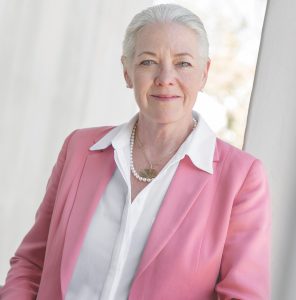
Heal the Ocean began back in August 1998 shortly after Hillary Hauser published an editorial in the Santa Barbara News-Press called “Another Day at the Beach?” following closure of local beaches due to unsafe bacteria levels. The citizens’ action group turned official 501(c)3 nonprofit quickly came to fame for its 15-year effort known as the South Coast Beach Communities Septic-to-Sewer project – which eventually removed ultra-polluting septic systems from seven miles of the Santa Barbara shoreline surrounding the internationally known Rincon surfing point.
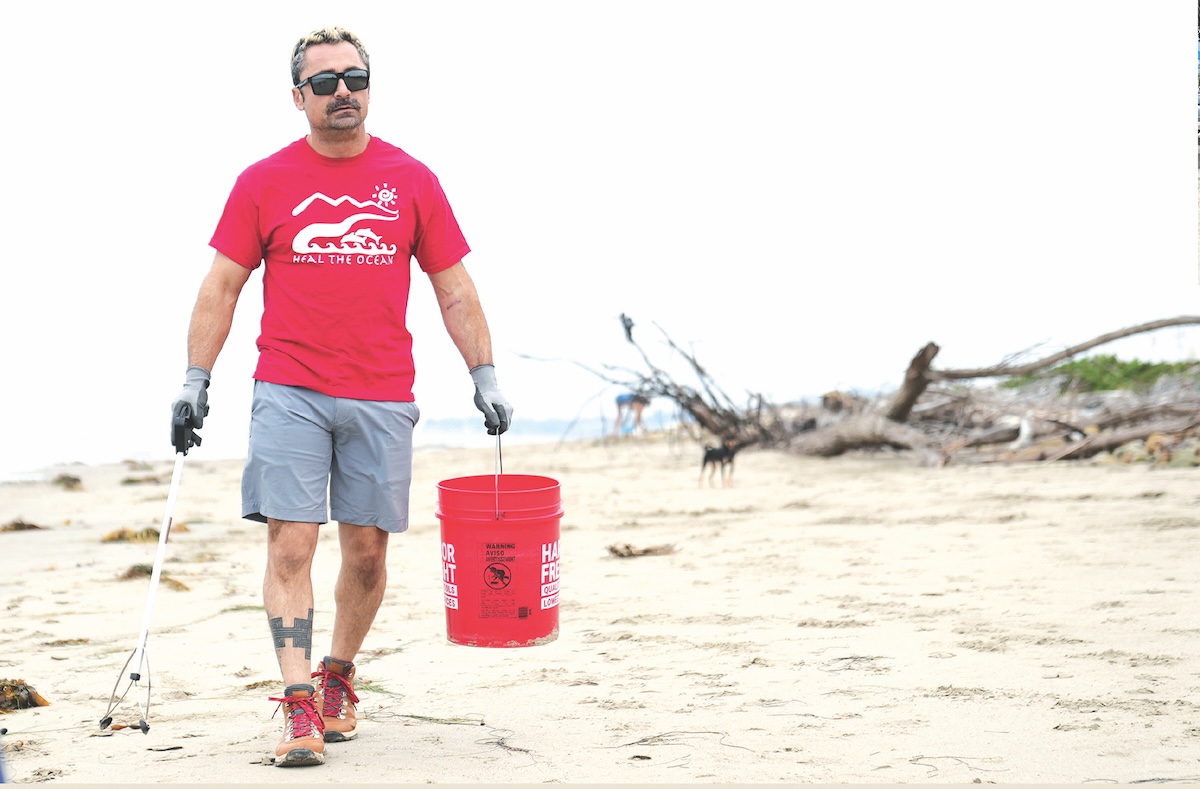
Since then, HTO has successfully worked to upgrade wastewater treatment plants, initiate recycled water studies and plans, spur groundwater studies, inaugurate Styrofoam recycling/repurposing, provide free doggy bags on the beaches, has fought to fix leaking abandoned oil wells, spearheaded beach cleanup programs and, quite notoriously, coordinated the safe removal of beached boats washed ashore by major storms – all with co-founder Hauser still at the head of the organization.
But late last spring, for the first time in its more than 25-year-history, Heal the Ocean transitioned to a new executive director with Karina Johnston’sappointment as successor to 80-year-old but still seemingly tireless Hauser (who remains involved as strategic director). Johnston’scareer has paralleled HTO’s ethos of being grounded in science-based solutions and community engagement. A board-certified environmental scientist and certified ecological restoration practitioner, Johnston’s expertise spans coastal restoration ecology, water quality, and coastal policy.
What HTO also has that’s even newer is a revised mission statement, one that adds to its original purpose and focus: “Heal the Ocean focuses on reducing ocean pollution and providing science-based solutions to improve the health of our ocean and resilience of our coasts to benefit people and wildlife.” It’s that second part about resilience that signifies a subtle shift in emphasis, highlighting attention on the significant issue of global warming, which causes the ocean to expand, creates stronger storms and rising sea levels; climate-related waterfront dynamism that is eating into the Santa Barbara coastline at an ever-increasing pace.
The expansion of HTO’s purpose coinciding with the arrival of Johnston is no accident; much of her expertise and experience is in the field of coastal adaptation and resilience.
“There’s a really strong intersection between some of the vulnerable parts of our coastline and the potential for ocean pollution,” she said. “A lot of our coastal infrastructure is vulnerable to sea level rise as are our coastal communities. So while we still have a ton of programs and projects on directly reducing ocean pollution, we’ve added helping our coastal areas become more resilient to sea level rise,” she explained. “That involves a lot of partnership and support and advising, for example, on the city of Santa Barbara’s waterfront adaptation plan, several dune restoration projects, and understanding and helping plan for vulnerable coastal infrastructure relocation or protection. We’re working with UCSB on shoreline adaptation planning … There is an inescapable vulnerability that we have to acknowledge. Long-term adaptation planning could involve relocating coastal infrastructure. But in the short term, we can buy time by implementing things like dune restoration projects.”
Other coastal resilience projects involve guiding people to an understanding that seawall as protective armor actually increases erosion, so we have a pressing need to develop more nature-based solutions, Johnston said.
“We’re available to support those different pathways,” she said.
As with efforts to reduce ocean pollution, HTO has dual focuses of aiding local governments and agencies who are working in the coastline resilience space, but also investigating which projects they can help implement or lead. Sometimes the projects co-exist.
“Wetland restoration, for example, is tied to flood protection but also has really substantial water quality benefits because wetlands are great at being sponges for toxins and bacteria,” Johnston said. “A healthy wetland means a healthier nearshore ocean environment.”
To be sure, HTO still has most of its focus on its core mission, which includes significantly expanding on the Styrofoam recycling/repurposing project. Earlier this month HTO purchased and installed a foam compressor at one of partner Marborg’s facilities.
“That dramatically raises the ability to locally process much more foam,” Johnston said. “We’ve kept over 80,000 pounds of Styrofoam out of landfills and out of the ocean to date.”
There are myriad environmental organizations in nonprofit-dense Santa Barbara, of course, which is exactly how it should be, Johnston said, describing the sector as a
Venn diagram.
“Each of our organizations has a different specialty, but then we also fold in and support each other in our efforts,” she said. “Some areas overlap, but there are so many different ways to approach the issues.”
That Venn diagram will be evident at this weekend’s Earth Day Festival in Alameda Park, where dozens of environmental nonprofits and organization will staff tables and booths to share materials and discuss their work.
Readers should feel free to pop by HTO’s booth to meet Johnston and other staff members and volunteers in that casual space, find out more about what’s been happening with the organization and how to
get involved.
“It would be wonderful to have people stop by and say hello and get information or share ideas,” Johnston said. “We’re really excited about the great work going on and thrilled to be part of the celebration of everybody working so hard for the environment.”
Visit www.healtheocean.org
Heal the Ocean
Donate now!
healtheocean.org
Phone: (805) 965-7570
Executive Director: Karina Johnston
Mission
Heal the Ocean focuses on reducing ocean, groundwater, and watershed pollution and providing scientific and research-based solutions to improve the health of our coast to benefit people and wildlife. HTO is focused on Santa Barbara County, but their methods are now serving as a model for other coastal communities across the country.
Begin to Build a Relationship
We know you care about where your money goes and how it is used. Connect with this organization’s leadership in order to begin to build this important relationship. Your email will be sent directly to this organization’s director of development and/or Executive Director.
They Heal Our Ocean
I am overjoyed to see how Karina Johnston, as HTO Executive Director, has not only kept to the HTO mission – but expanded it powerfully, to lead serious work on climate change and other ocean pollution issues affecting our coast.
Help Build the Resilience of Our Coast
Turn a coastal solution into a working model.
Heal the Ocean is seeking support to take a nature-based resilience project from idea to implementation. Restoring coastal dunes or wetlands could provide immediate benefits for habitat and water quality while creating a natural defense against flooding. Just as Heal the Ocean has turned local pollution solutions into models for broader change, this project could show what coastal resilience looks like in practice.
Key Supporters
The Larry Barels Family
Brittingham
Family Foundation
The Cheeryble Foundation
Roger & Sarah Chrisman
Thomas & Nancy Crawford
Roy E. Crummer Foundation
Tom & Sheila Cullen
Julia Louis-Dreyfus &
Brad Hall
Dan Emmett
Greg & Elisabeth Fowler
Betty & Peter Gray
Kirby-Jones Foundation
Susan Harris
Just Folk/Susan Baerwald &
Marcy Carsey
Nora McNeely-Hurley
Foundation
Jillian & Pete Muller
Henry & Nanette Nevins
Adam & Kara Rhodes
Sam & Sherilyn Scranton
Rev. Trust
Steve Starkey &
Olivia Erschen
Cheryl Tomchin
Turpin-Allebrand Family
Charitable Foundation
Patricia Bragg Foundation
La Centra-Sumerlin
Foundation