Unite to Light: It Takes Everyone to Light the World
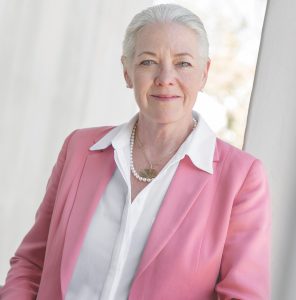
Megan Birney Rudert isn’t one to rest on her laurels. On the last Sunday in April, the Unite to Light president & CEO received a 2026 Environmental Hero award from the Community Environmental Council. The setting was the 56th annual Santa Barbara Earth Day Festival, where the award publicly recognized Birney Rudert’s leadership of the Santa Barbara-based nonprofit. Unite to Light (UTL) works to expand access to clean, affordable solar light and energy in off-grid communities worldwide; at this writing a tally that includes more than 80 countries.
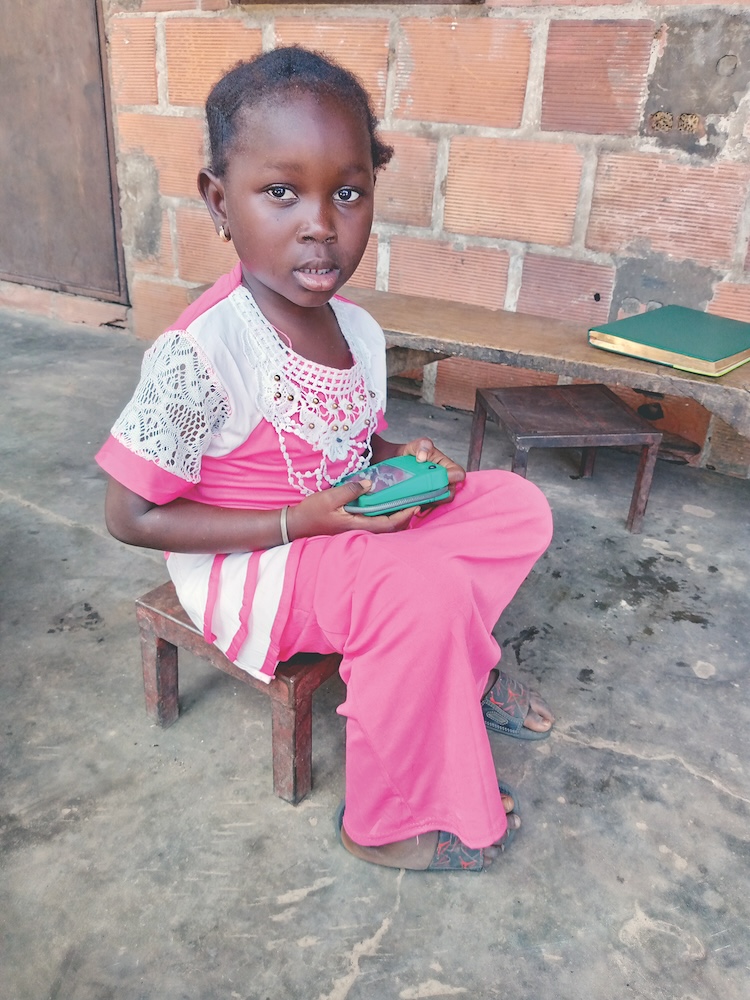
Less than a week later, she was off to Honduras with a partner to meet directly with the volunteer nurses and others who have been distributing thousands of UTL’s solar lights and chargers in remote and hard to access areas of the country.
Then it was back to town to host “Light for a Sustainable Future,” Unite to Light’s inaugural Illuminating Impact Summit, held on May 15, the International Day of Light. The powerful one-day symposium convened leaders in clean energy, global health, and innovation to explore what’s next in accelerating equitable access to energy worldwide.
It’s all in service of the organization’s understanding that light and reliable power are foundational to health, education, disaster response, economic mobility, and climate resilience. Unite to Light’s mission is an issue of equity that affects all of us.
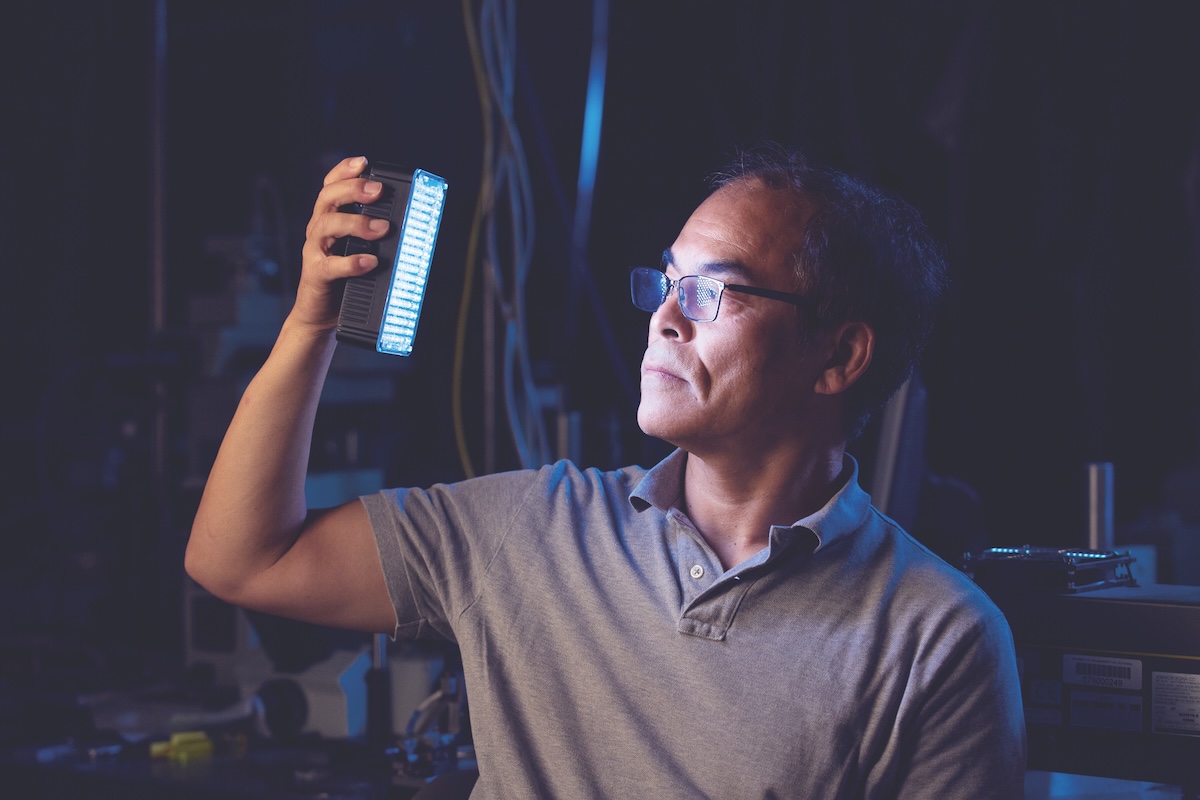
UTL’s solar light, a simple device available for $10, goes a long way toward reducing the developing world’s reliance on harmful kerosene for illumination, simultaneously improving health, safety, and opportunity. Artificial light, after all, enables students to study after dark, supports safer childbirth, reduces food insecurity, and increases safety. UTL’s solar-powered battery pack provides reliable power in disaster zones.
That was the focus behind the trip to Honduras.
“We don’t travel often because it’s much more efficient to send the lights directly,” Birney Rudert said. “They’re so effective and so efficient. We can send a solar light anywhere in the world for about $10. Those little lights are incredibly effective and are built to last from seven to 10 years, so they have a lot of impact. But we’ve been partnering with this group there for five years, so we really wanted the opportunity to meet not just the organization but the people who actually hand out the lights on the frontline.”
The group in question works primarily in the remote regions of Honduras, in mountain communities and other places that have no electricity at all, Birney Rudert said.
“When there is an accident, when somebody’s sick, when there’s a birth that needs assistance, these are the women who go to the family and connect them with the resources. We got to meet with 23 of them and hear about their work and their community. They’re the ones who provide the lights when something happens. So it was exciting to bring thousands of lights with us and meet with the folks who are on the ground, talk about how the lights work, hear what they need, and get feedback that was incredibly valuable and inspiring.”
That was also the goal and result of the “Light for a Sustainable Future” summit in May, Birney Rudert said.
A panel exploring the intersection of health, gender equity, and access to light included representatives from UCSB’s Institute for Energy Efficiency, World Telehealth Initiative, Direct Relief, and Schneider Electric. A seminar titled “Local Innovation, Global Impact” featured people from Dragon Q Energy, SimpliPhi Power and others. Also highlighted were impact partners representing those who are directly advancing sustainability, humanitarian aid, healthcare access, and community resilience around the world. That list included the United Nations Population Fund (UNFPA), Solar Sister, Winko Solar, Red Cloud Renewable, World Central Kitchen, Community Power South, and Santa Barbara’s own influential Safe Parking Program. The seminar-closing panel discussion – California’s Clean Energy Playbook – featured, among others, the chair of the California Energy Commission and Governor Gavin Newsom’sTribal Affairs secretary, among others.
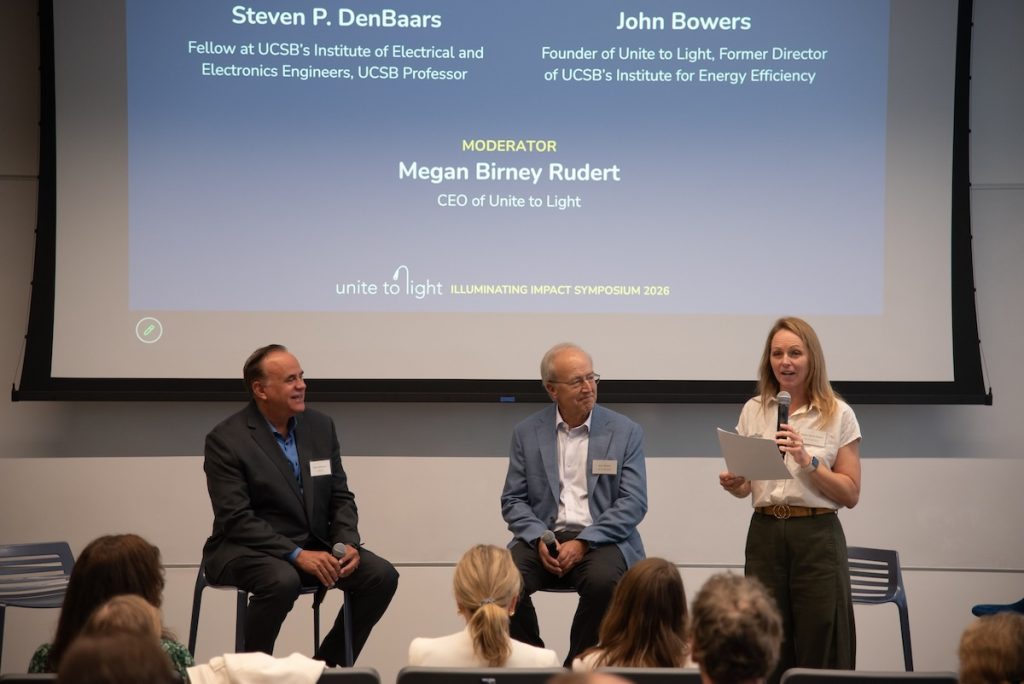
“The level of people in that room was truly phenomenal,” Birney Rudert said. “I’ve been doing this work for 10 years and it was truly a Who’s Who of people working in light and humanitarian aid around the globe. Having all those people come together and talk about their work, their impact, and about how we can continue to expand access to light and power was really inspiring and energizing.”
Among the highlights, she said, was Josh Cox of Community Power South, a nonprofit solar development organization building resiliency centers throughout New Orleans, with a goal to ensure that at least one center lies within a 15-minute walk of everybody in the city. Olasimbo Sojinrin of Solar Sister shared how her organization trains female entrepreneurs in last mile communities, the folks who live in hardest to reach areas on the planet.
“Bringing solar light and power to people without it does so much, including creating economic opportunities within these regions that don’t often have much,” she said.
Equally inspiring was hearing from Akonkwa Mubagwa of Winko Solar, a for-profit company that is equipping hospitals and clinics across Africa with what is essentially a microgrid, Birney Rudert said.
“It’s a solar battery that can cover the most important things, refrigerators for vaccines, ventilators, and at least the lights in the operating rooms. It’s modular and it’s scalable so a hospital can buy what they need now and then add as they grow.”
The bottom line is recognizing that working together – nonprofits side-by-side with private for-profit companies – is not only at the core of Unite to Light’s work – it’s in their name.
“It takes all of us to light the world.”
Visit https://unitetolight.org for more info
Unite to Light
Donate now!www.unitetolight.org
(805) 617-0590
President & CEO: Megan Birney Rudert
Mission
Unite to Light envisions a world where every person has access to clean, affordable light and energy. They provide low-cost solar lighting and energy to people living without electricity to improve global health, education, prosperity, and fight climate change.
Begin to Build a Relationship
We know you care about where your money goes and how it is used. Connect with this organization’s leadership in order to begin to build this important relationship. Your email will be sent directly to this organization’s director of development and/or Executive Director.
I’ve learned that meaningful change often begins with something simple. Unite to Light brings light and power to villages, clinics, and schools where darkness has limited opportunity. Suddenly, evenings become time to study, work, cook, care for family, and gather together. It is a privilege to be part of that transformation.
$2,500 Lights the Path to Graduation
A $2,500 investment funds a “Light Library” – providing solar lights for students to study safely after dark. Each light costs $10 and lasts 7-10 years, making it one of the most cost-effective education interventions available.
Unite to Light is seeking 25 donors at this level to help thousands more students stay in school and succeed.
Buy One. Give One.
For every product Unite to Light sells here in the U.S., they donate one to someone without electricity.
Key Supporters
John Bowers
Claude Dorais
Gisela Voss Kernan
Dawn Mitcham
Wade Nomura
Heather Bennett
Maggi Alexander
Wendy & Larry Barels
Lynda Nahra
The James S. Bower Foundation
Rudi Schulte Family Foundation
Shuji & Yuki Nakamura
Jeff Henley
Hans & Esther Brand
Art & Louise Fisher
Bob Simon
Jeff Harris